How to Follow Up When You Haven’t Received a Reply
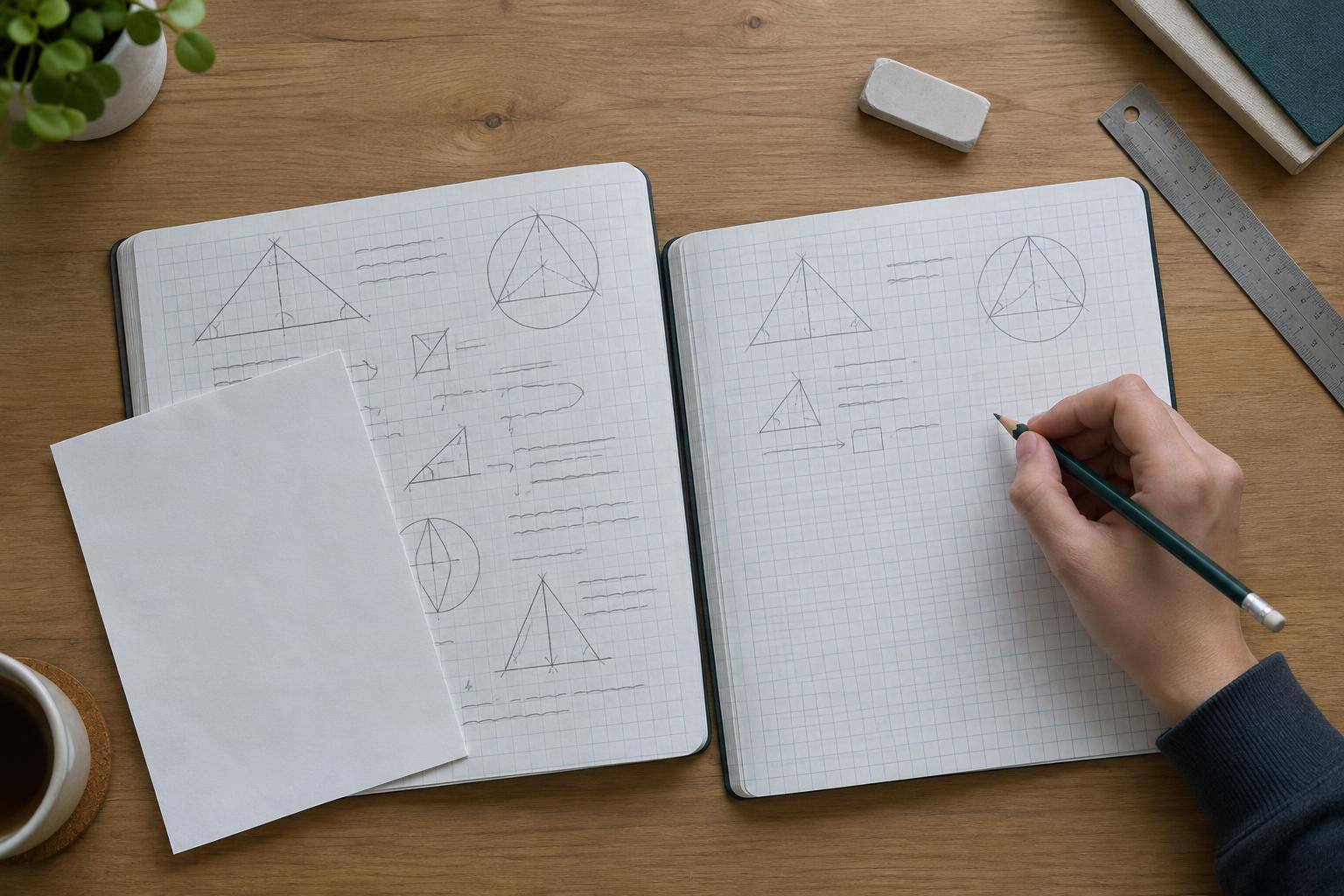
A follow-up can move a conversation forward without sounding impatient. Learn when to send one, what to include, and how to decide what to do if you still hear nothing.
Read article ↗
Communication

Learning Skills
More to discover ↗A follow-up can move a conversation forward without sounding impatient. Learn when to send one, what to include, and how to decide what to do if you still hear nothing.
Read article ↗
Communication

A good handoff helps someone continue a task without reconstructing every decision you made. Learn what to include, how to separate finished work from open questions, and how to check that your note is usable.
Read article · 4 min↗A useful creative brief does not need to be long. Learn how to define a small project’s purpose, audience, requirements and review process so a collaborator can begin with fewer guesses.
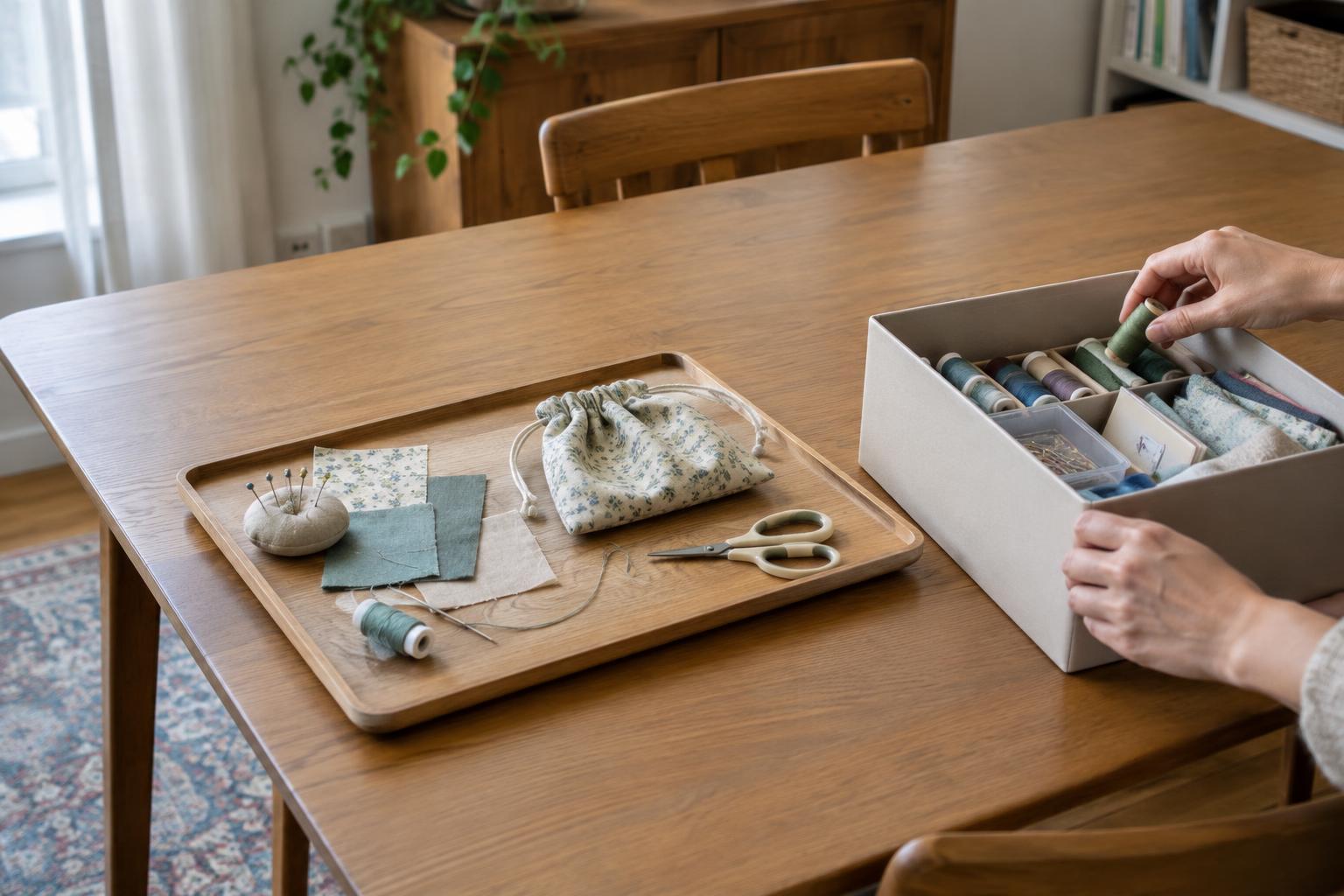
Read article · 4 min↗A personal project does not need a permanent studio. Set up a temporary workspace, keep unfinished work easy to find, and make cleanup part of the plan so you can return to the project without starting over.
Read article · 3 min↗A personal glossary can help you make sense of unfamiliar terms without turning every study session into a search for definitions. Learn how to choose useful entries, write them in your own words, and use them while practicing.
Read article · 4 min↗A useful workday review does not need to be a long planning session. Spend a few minutes capturing loose ends, choosing a realistic starting task, and leaving yourself enough context to begin again tomorrow.
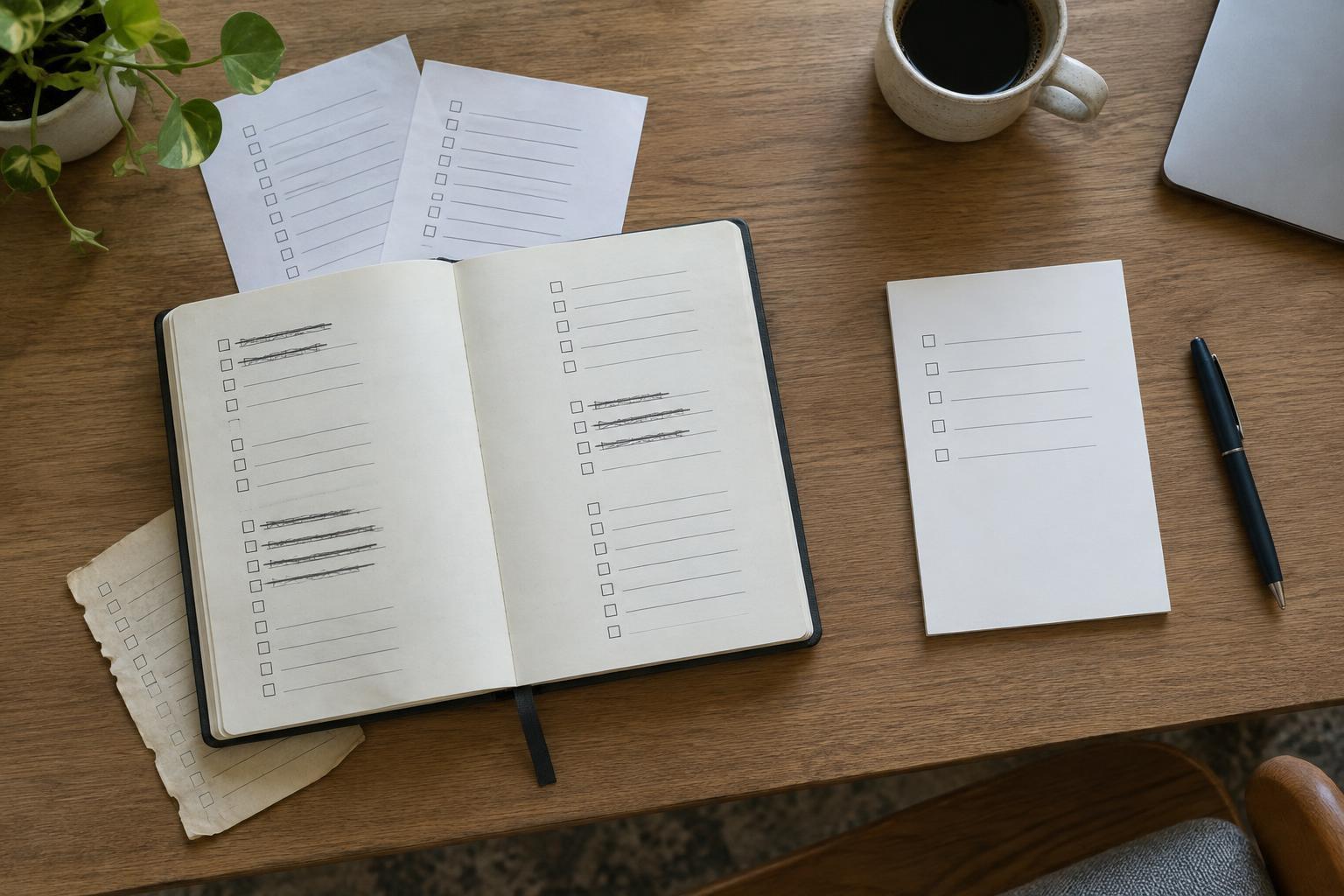
Read article · 4 min↗A task list is useful when it helps you decide what to do next. Learn how to turn vague entries into clear actions, prevent duplicates, and review unfinished tasks without making list maintenance a project of its own.
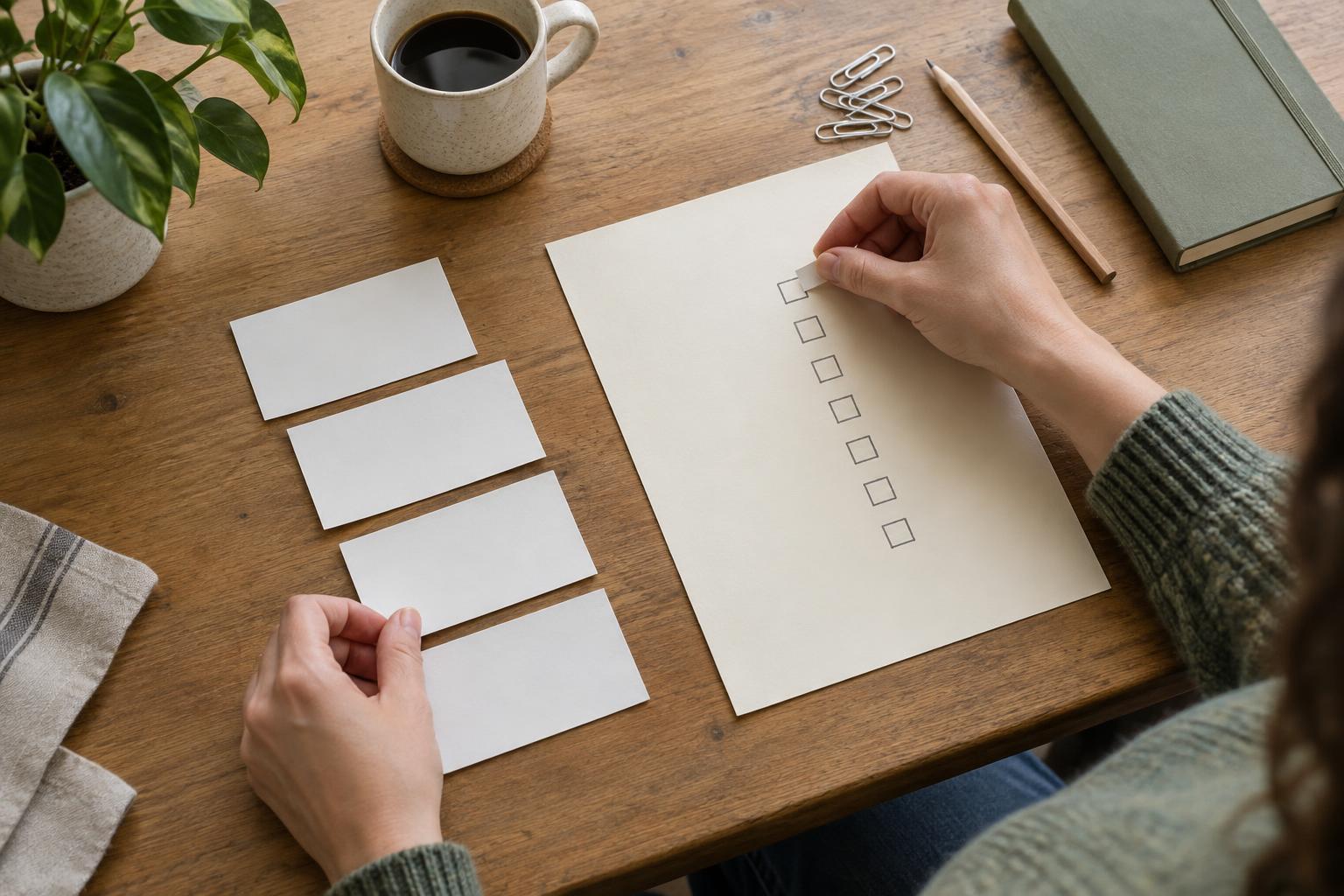
Read article · 4 min↗A useful work checklist does more than remind you of tasks. It makes a recurring process easier to start, review and hand off. Learn how to map the work, write clear checks and improve the list as you use it.
Read article · 4 min↗A practical document versioning routine helps you see which file is current, which one is approved, and what changed along the way. Learn how to name files, manage review copies, and keep a dependable final version.
Read article · 4 min↗A useful file system does not need dozens of folders or elaborate rules. Start with a few clear locations, choose a naming pattern that makes files easy to recognize, and build a small maintenance habit to keep the system working.
Read article · 4 min↗When assignments arrive through different channels, it is easy to lose track of what is due and what needs attention first. A single deadline list, a short weekly review and a few clear next actions can make the workload easier to see and manage.
Read article · 4 min↗When a project depends on a reply, approval, or delivery from someone else, the next step can disappear from view. A waiting-for list gives those handoffs a simple home so you can follow up at the right time without repeatedly checking every message.
Read article · 4 min↗An interruption can leave you unsure where to begin, even when you still have time to work. A short reentry routine can help you find your place, choose the next action and make progress without waiting to feel completely focused.
Read article · 3 min↗A workable message routine is not about ignoring people. It is about deciding when to check, how to spot genuinely urgent requests, and what to do with each message so the same inbox does not demand your attention all day.
Read article · 4 min↗Moving between messages, planning, writing and routine updates can make a workday feel busy without giving any one task enough attention. Learn how to group similar work into manageable blocks while leaving room for urgent requests and changing priorities.
Read article · 4 min↗A new request does not automatically require an immediate yes or a longer workday. Use a short pause to clarify what is needed, check existing commitments, agree on a realistic trade-off, and keep everyone informed.
Read article · 4 min↗Recurring tasks can be easy to overlook precisely because they are familiar. A short checklist helps you remember the important steps, see what is finished and improve a routine without turning it into a complicated system.
Read article · 3 min↗A large assignment is easier to approach when you separate its outcome from the actions needed to reach it. Use this practical method to define what “done” means, map the main parts, choose a small starting action, and keep the plan useful as the work changes.
Read article · 3 min↗A workable weekly plan accounts for both due dates and the time you actually have. Learn how to map commitments, estimate effort, protect space for focused work, and adjust when the week changes.
Read article · 4 min↗A short time log can turn vague guesses about routine work into more useful estimates. Learn what to record, how to spot patterns, and how to plan with room for interruptions.
Read article · 4 min↗Time blocking gives different kinds of work a place on your calendar. Learn how to choose realistic blocks, protect focused work, leave room for routine duties and adjust when the day changes.
Read article · 4 min↗When several tasks demand attention at once, the goal is not to find a perfect ranking. A short triage process can help you identify real deadlines, unblock other work, communicate trade-offs and choose a useful next step.
Read article · 4 min↗A calendar and a task list answer different questions. Use the calendar for time commitments and the task list for work that still needs doing. Here is a practical way to place deadlines, appointments, and flexible tasks without losing sight of either.
Read article · 4 min↗A long task list tells you what needs attention, but not what can fit into one day. Use this simple planning routine to choose priorities, estimate time, leave room for interruptions and adjust without losing track of the work.
Read article · 4 min↗A trusted task system starts with one reliable place to catch commitments, a quick way to record useful details, and a regular habit of deciding what each note means. Here is a practical setup you can maintain on busy days.
Read article · 4 min↗Personal projects often stall because the plan is too large, too rigid, or too vague for everyday life. Learn how to spot common planning mistakes and make your next attempt easier to start, sustain, and finish.
Read article · 3 min↗Finishing the main task is not quite the same as finishing a project. A short closeout routine can help you clear the workspace, sort leftover materials, save useful records, and make the result easier to maintain.
Read article · 3 min↗A project can be neatly finished and still miss the reason you started it. Use a short purpose check to compare the result with your original aim, decide what needs fixing, and close the work without chasing endless improvements.
Read article · 4 min↗A personal project rarely follows its first plan exactly. Learn how to identify likely setbacks, choose useful responses in advance, and keep a backup plan simple enough to use when things change.
Read article · 4 min↗Doing a home project yourself can save money and teach you a skill, but supplies are only part of the cost. Use a simple comparison of expenses, time, and safety to decide what to tackle, what to delegate, and when a mixed approach makes sense.
Read article · 4 min↗A stalled project does not always need more discipline. Learn how to diagnose what changed, choose whether to restart, reduce the scope, or stop, and make a small next move without turning the decision into a judgment about yourself.
Read article · 4 min↗A new idea can make a personal project better—or pull it away from the thing you set out to finish. Use a simple decision process to check its purpose, cost and timing before adding it to your plan.
Read article · 4 min↗A personal project may fit your free time but still depend on deliveries, appointments, opening hours, or other people’s schedules. Learn how to identify these outside constraints, put them in the right order, and build a plan that can absorb a delay.
Read article · 4 min↗A shared project runs more smoothly when everyone knows what they are making, who owns each task and how decisions will be made. Use a short project agreement, visible task list and regular check-ins to keep the work manageable.
Read article · 4 min↗A project log does not need to be a detailed diary. Recording a few decisions, measurements, and next steps can help you understand what you tried and make it easier to restart after a break.
Read article · 4 min↗A project task list is easier to use when it shows what must happen before what. Learn how to spot dependencies, choose the next available task, and keep your plan flexible when a step stalls.
Read article · 4 min↗Before committing months of work or buying supplies, try a small version of your project. A clear question, a modest trial and a short review can help you decide what to do next.
Read article · 4 min↗Research helps you start a new project with fewer avoidable mistakes, but it can also become a way to postpone the work. Learn how to define what you need to know, choose useful sources, test assumptions and decide when you have enough information to begin.
Read article · 4 min↗A short inventory can help you plan a project around the tools and materials you already own. Learn how to check what is usable, identify genuine gaps and make a more deliberate shopping list.
Read article · 4 min↗A project budget is more useful when it shows what must be paid for, what can wait, and what you will do if costs change. Learn a simple way to build and maintain one for a personal project.
Read article · 4 min↗An unfamiliar project is hard to schedule because you do not yet know where the slow parts are. Learn how to break the work down, test one small piece, make room for uncertainty and improve your estimate as you go.
Read article · 4 min↗A useful project plan begins with a clear picture of what “finished” means. Learn how to work backward from that result, identify the steps it depends on, and build a realistic plan you can adjust as you go.
Read article · 4 min↗A weekend project is easier to finish when you define a small, visible result before you begin. Learn how to account for available time, hidden tasks and uncertainty, then set a stopping point that leaves you with something useful.
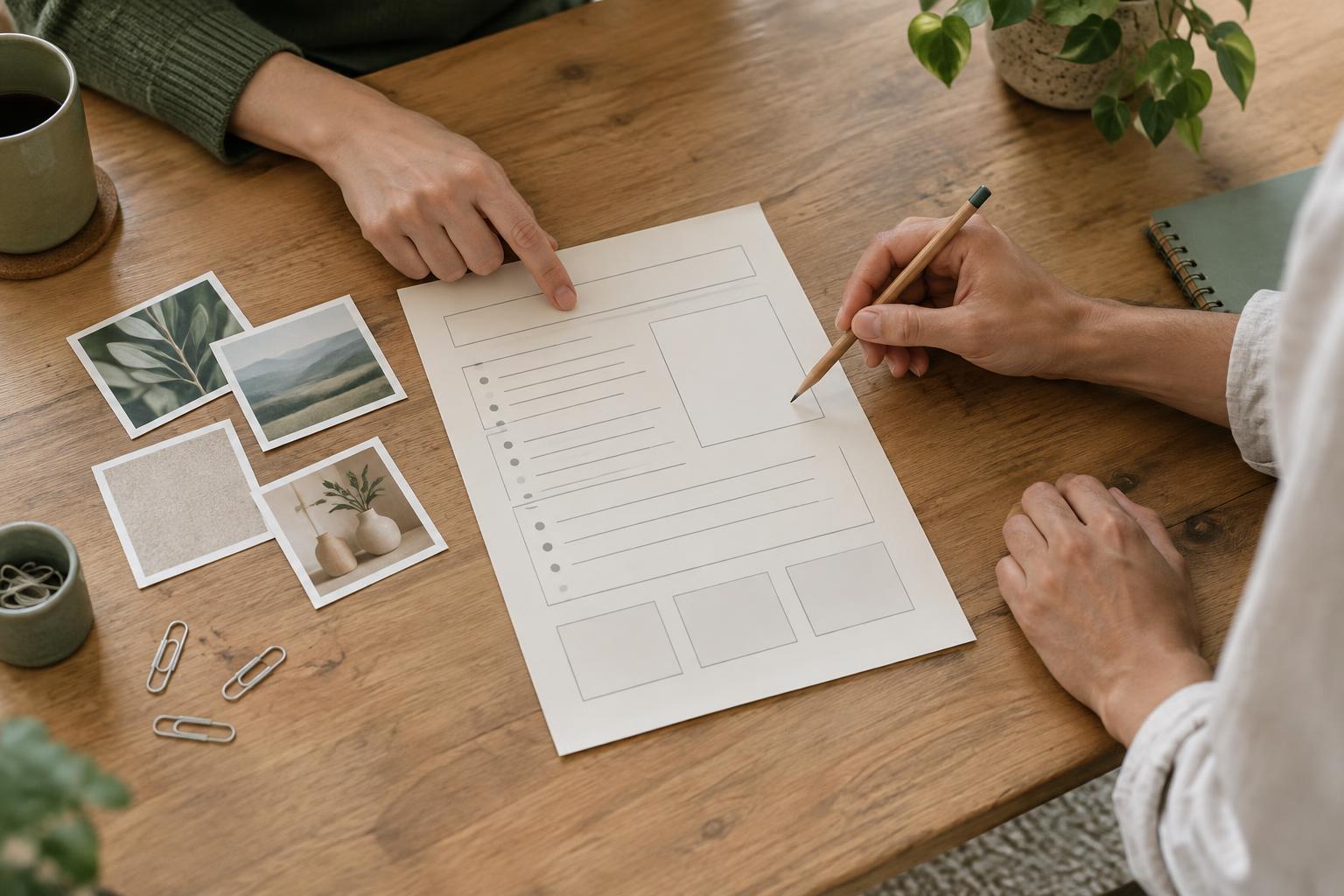
Read article · 4 min↗A project becomes easier to start when you can name what you will make, what counts as finished, and what you will leave out. Use a small planning exercise to turn a loose idea into a concrete outcome.
Read article · 4 min↗A good personal project does not need to be impressive. It needs to fit the life you have room for. Use a simple way to compare ideas by interest, available time, space, cost, and the kind of progress you would enjoy making.
Read article · 4 min↗Studying through every dip in concentration is not always productive. Learn to spot signs that a short break may help, distinguish fatigue from a difficult task, and return with a clear next step.
Read article · 4 min↗You do not need long, uninterrupted study sessions to make a skill more usable. Learn how to choose a small target, build a short practice routine, get feedback without an instructor and decide what to work on next.
Read article · 4 min↗Knowing how to do something in a familiar setting does not always mean you can use it elsewhere. Learn a practical way to spot what carries over, adapt what does not, and test your approach on a small scale.
Read article · 3 min↗Mnemonics can make names, sequences and other specific details easier to recall. Learn how to build a useful memory cue, practice retrieving it and recognize when you need understanding instead.
Read article · 4 min↗A polished course or tutorial is not necessarily a reliable one, and a reliable one may still be wrong for your goals. Use a few practical checks to judge its claims, teaching approach, difficulty and usefulness before you commit your time.
Read article · 4 min↗A beginner course needs more than an appealing topic and a long lesson list. Learn how to compare course structure, practice opportunities, and support so you can choose an option that fits your goal, schedule, and starting point.
Read article · 4 min↗A useful mistake review is not a search for someone to blame. It is a short, specific look at what happened, what made the error likely, and what you can change before the next attempt. Learn a practical way to turn everyday setbacks into better decisions and habits.
Read article · 4 min↗Getting stuck is part of learning, but repeating the same attempt rarely helps. Use a short reset, identify the exact point of confusion, try a smaller version, and turn any hint or solution into a new attempt you can do on your own.
Read article · 4 min↗Time spent studying tells you how long you worked, not what you can do. Learn to track progress through small demonstrations of recall, application, accuracy and independence.
Read article · 3 min↗A useful study plan does not require long, uninterrupted blocks of time. Learn how to choose a manageable session length, give each session a clear purpose, and adjust your plan when life interrupts it.
Read article · 4 min↗Being able to recognize an idea is not the same as being able to explain it. The teach-back method helps you find what you understand, where you hesitate, and what to study next. Here is a practical way to use it on your own or with a learning partner.
Read article · 3 min↗Concept maps make relationships visible, while linear notes preserve sequence and detail. Learn when each format helps, how to combine them, and a simple exercise for choosing the right approach for what you are learning.
Read article · 4 min↗A textbook chapter is easier to work with when you give your reading a purpose. Use a quick preview to find its structure, turn headings into questions, and pause to check what you can explain without looking.
Read article · 4 min↗Good lesson notes help you understand and use an idea later. Learn how to listen for the main point, record examples selectively and turn rough notes into a practical study tool.
Read article · 4 min↗A worked example can show you how to approach a problem, but reading one is not the same as solving one. Learn a practical sequence for studying examples, testing your understanding and gradually working independently.
Read article · 4 min↗Practicing one kind of problem at a time can feel smooth, but it may leave you unsure what to do when problems appear in a new order. Interleaving mixes related problem types so you practice recognizing which approach fits. Learn when to use it, when to build a foundation first, and how to make a manageable mixed-practice session.
Read article · 4 min↗Cramming can help you prepare for something tomorrow, but spaced practice is usually a better fit when you want to remember and use a skill later. Learn how to set review intervals, test your recall and adjust your plan without turning it into another project.
Read article · 4 min↗Rereading can make material feel familiar, but familiarity is not the same as being able to recall it. Learn a simple, low-pressure way to test yourself, check your answers and decide what to review next.
Read article · 4 min↗A complex skill can feel impossible to practice when every attempt requires you to do everything at once. Learn how to identify its smaller parts, choose useful exercises, and put the pieces back together.
Read article · 3 min↗Big goals such as “get better at writing” are hard to practice because they do not say what to do next. Learn how to turn a broad ambition into an observable skill, choose a small first milestone, and use feedback to decide what to practice after that.
Read article · 4 min↗A creative practice journal can help you remember what you tried, notice useful surprises, and choose your next experiment. Here’s a simple way to keep one without turning your hobby into another chore.
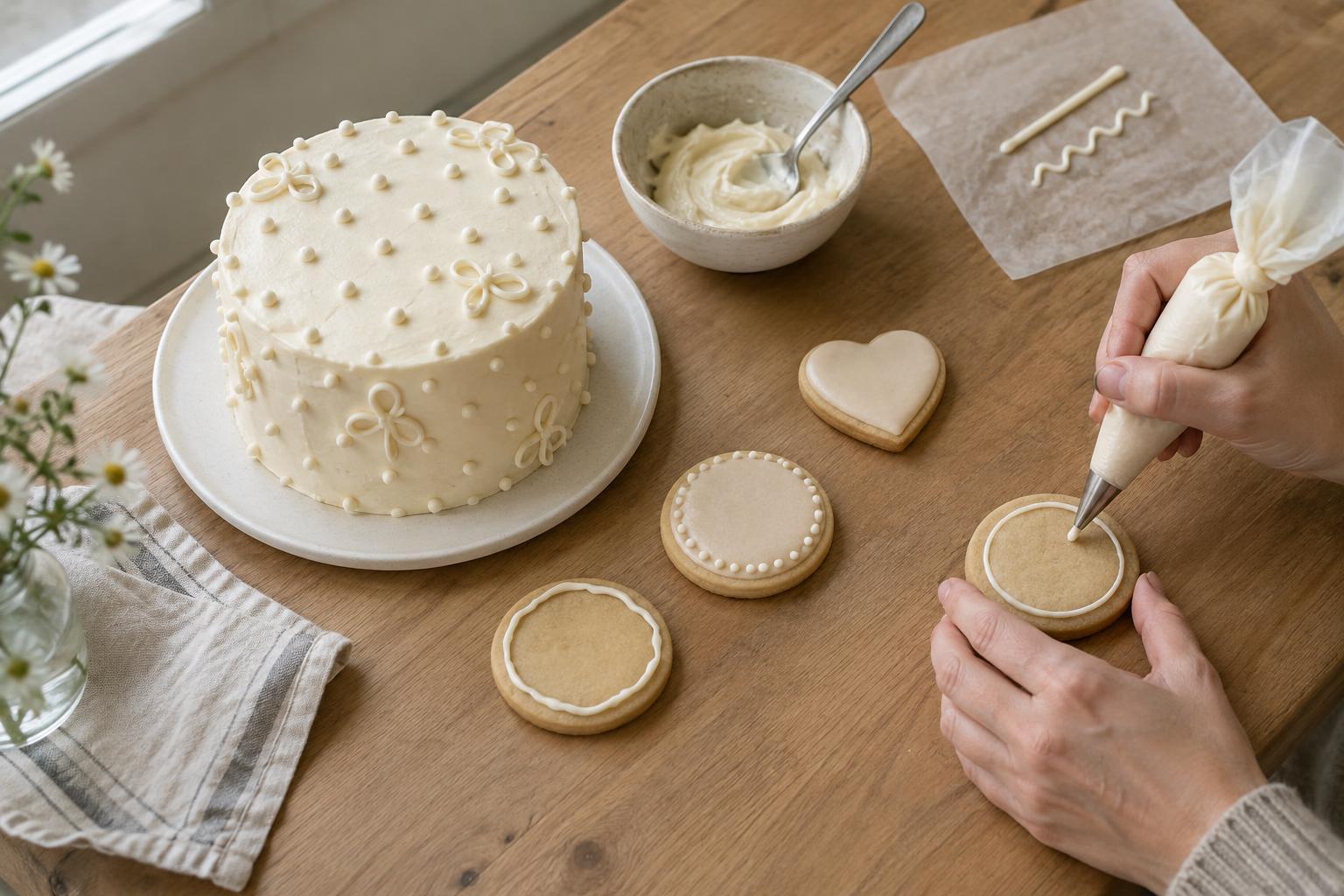
Read article · 4 min↗Decorating a cake or a batch of cookies gets easier when you treat icing texture as something you can test and adjust. Learn how to avoid runny outlines, clogged piping bags and overcrowded designs with a few low-pressure practice steps.
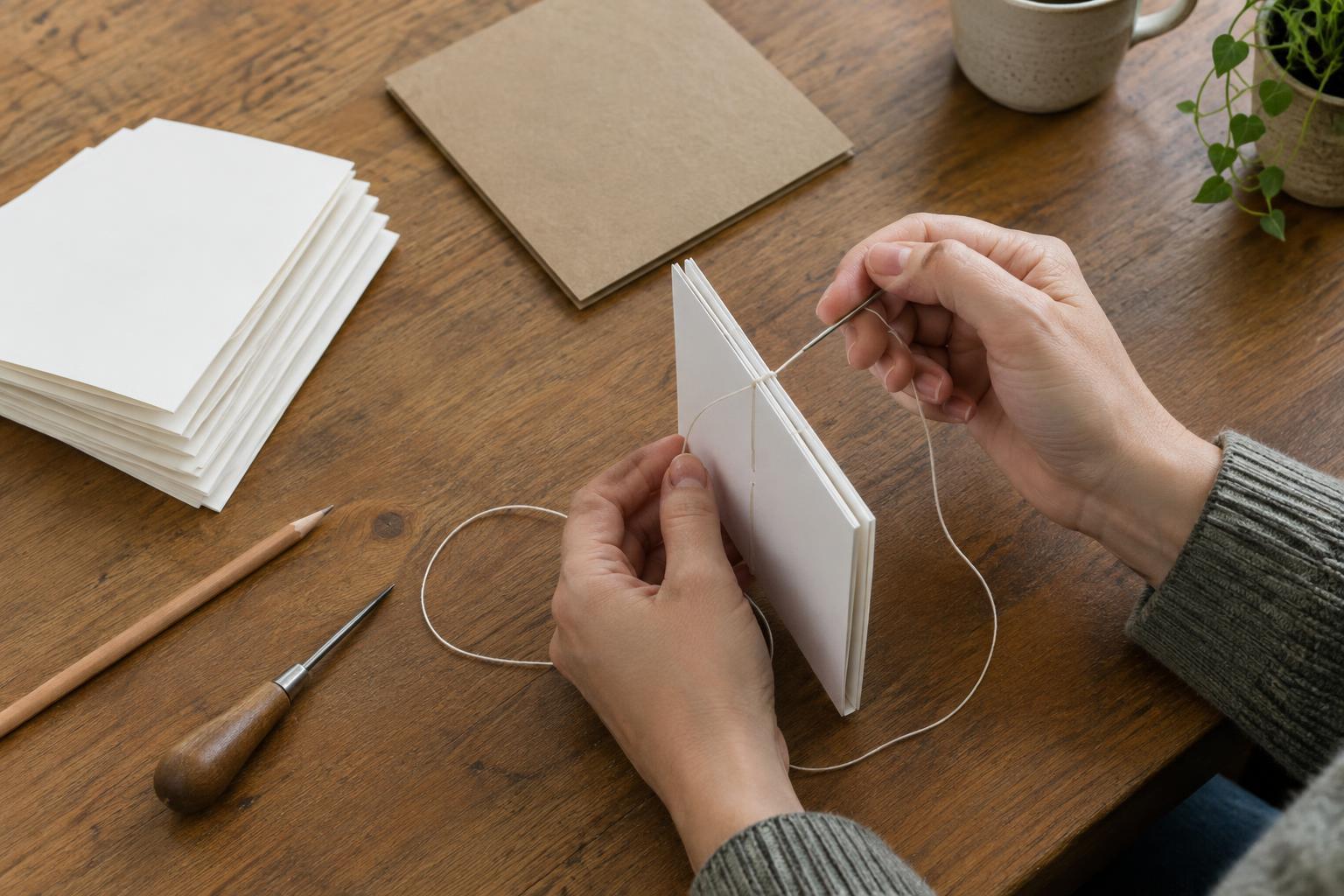
Read article · 4 min↗Make a small, useful notebook from paper, a card cover, thread and a needle. This beginner-friendly guide covers folding, marking three holes, sewing a pamphlet stitch and fixing common mistakes.
Read article · 4 min↗A quieter recording starts before you press record. Learn how to spot common household noise, choose a workable space, place a microphone for voice or instruments, and make short test recordings before a full take.
Read article · 4 min↗A short, repeatable practice session can make learning a song feel more manageable. Choose a suitable piece, divide it into small phrases, work on one difficulty at a time, and use a simple plan to pick up where you left off.
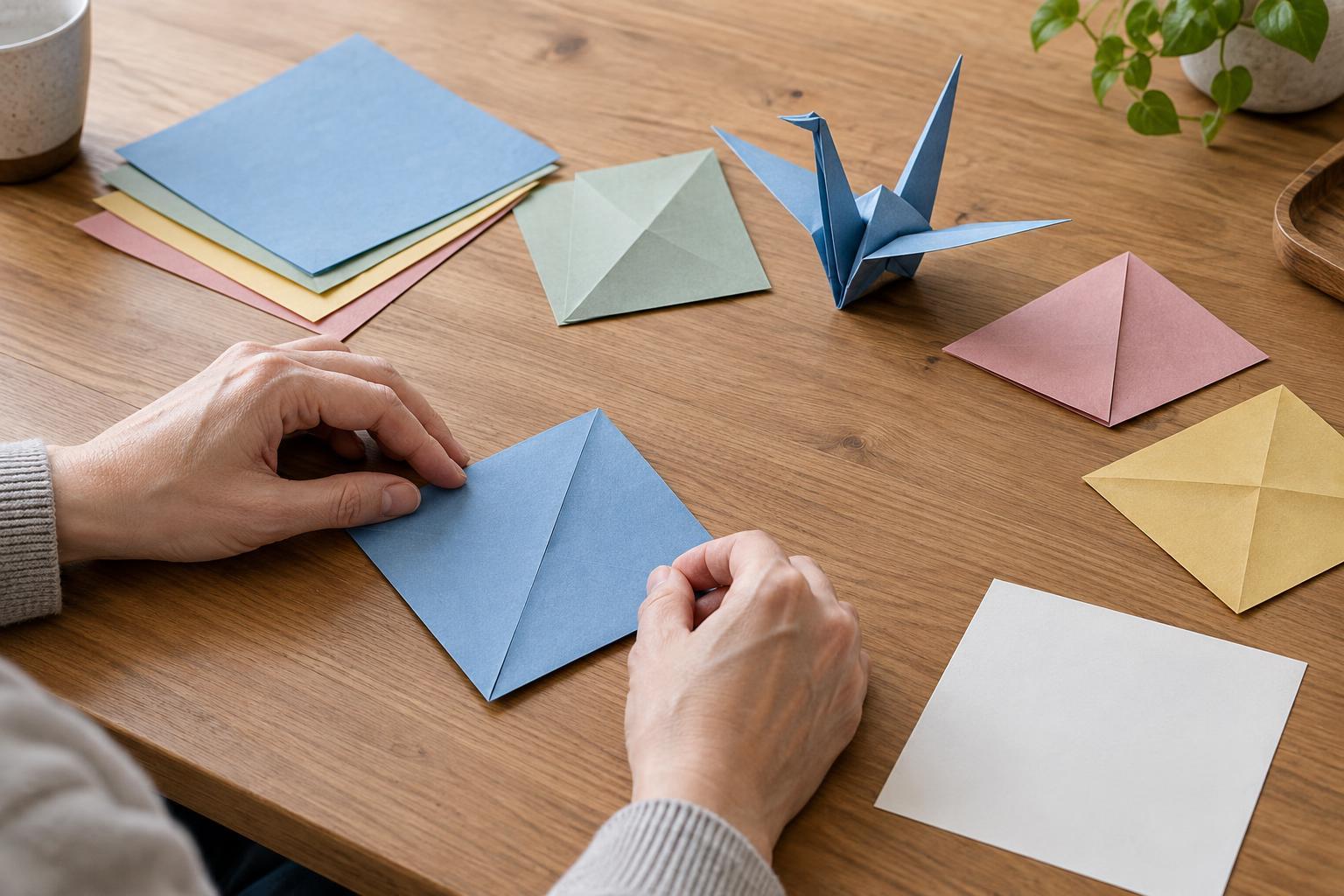
Read article · 4 min↗Origami becomes easier when you treat each diagram as a small instruction rather than a picture of the finished model. Learn how to recognize common fold symbols, align paper carefully, and practice with simple folds before moving to more complex shapes.
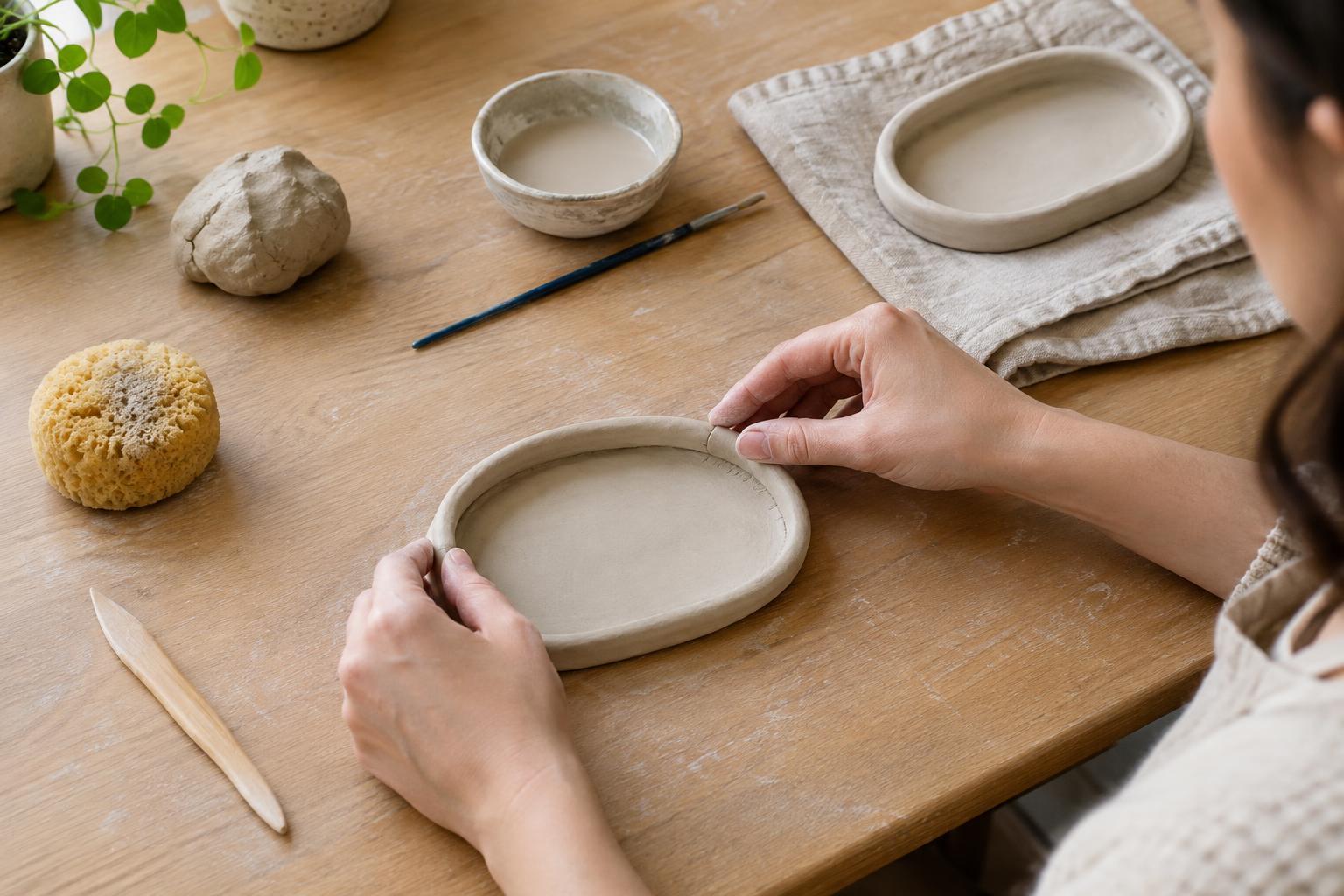
Read article · 4 min↗Make a small air-dry clay trinket tray while practicing three useful skills: shaping an even form, joining pieces securely, and letting the finished object dry without rushing it.
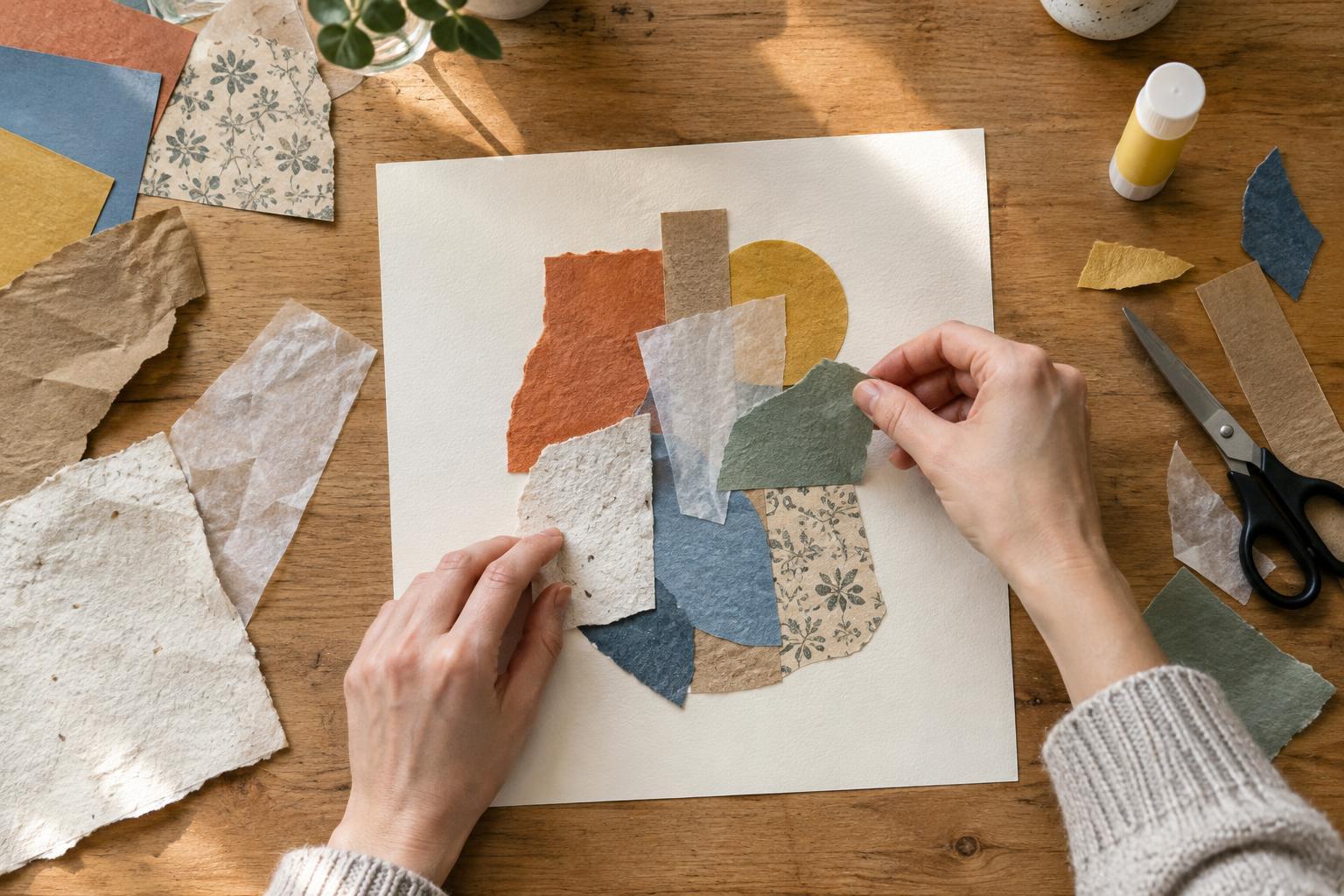
Read article · 4 min↗Paper collage is an approachable way to explore composition with materials already around you. Learn how to collect useful scraps, build a simple color plan, test arrangements, and add texture and depth without making the process complicated.
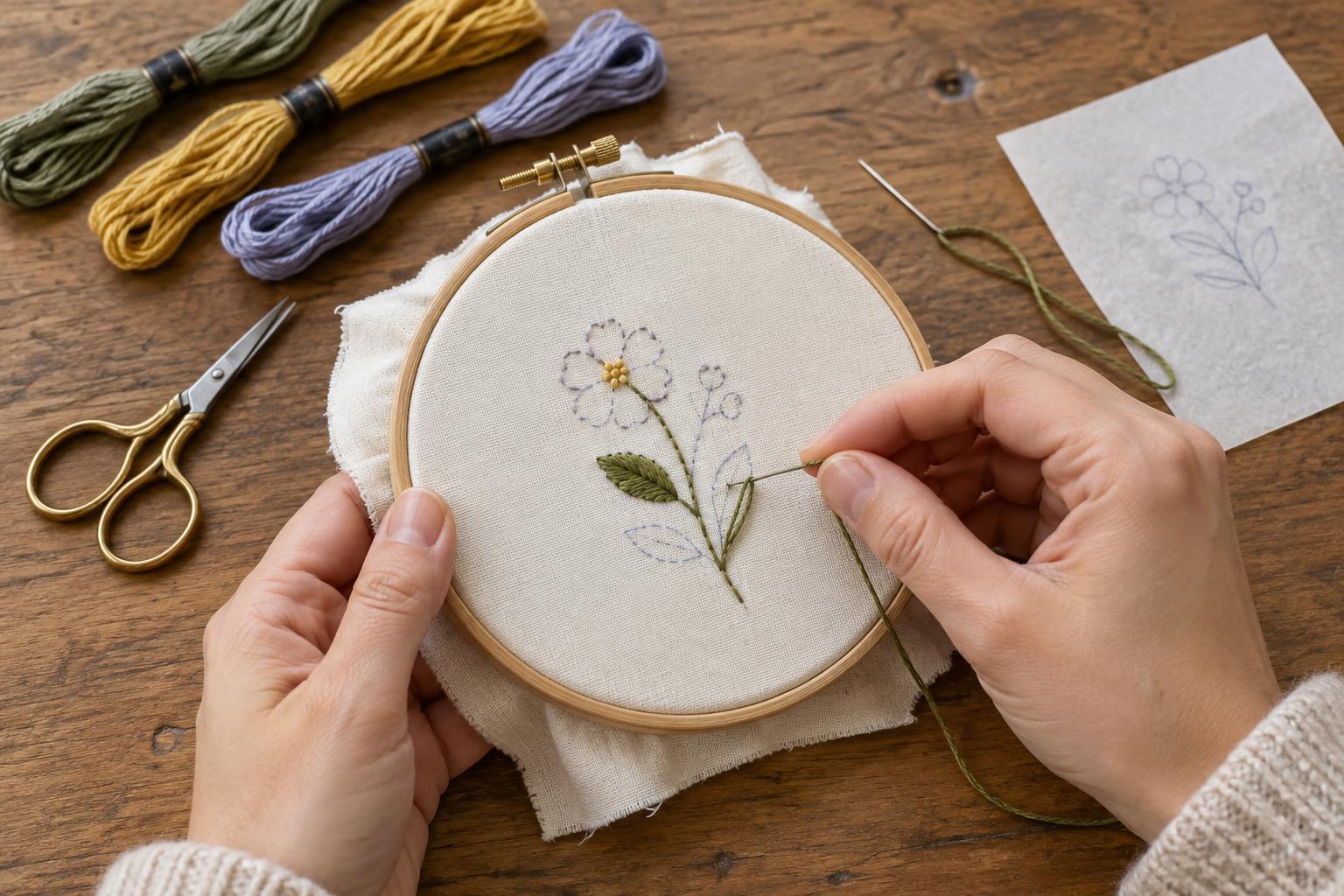
Read article · 4 min↗A small practice design is enough to learn the essentials of hand embroidery. Choose a stable fabric, transfer a simple pattern, then build confidence with running stitch, backstitch and satin stitch.
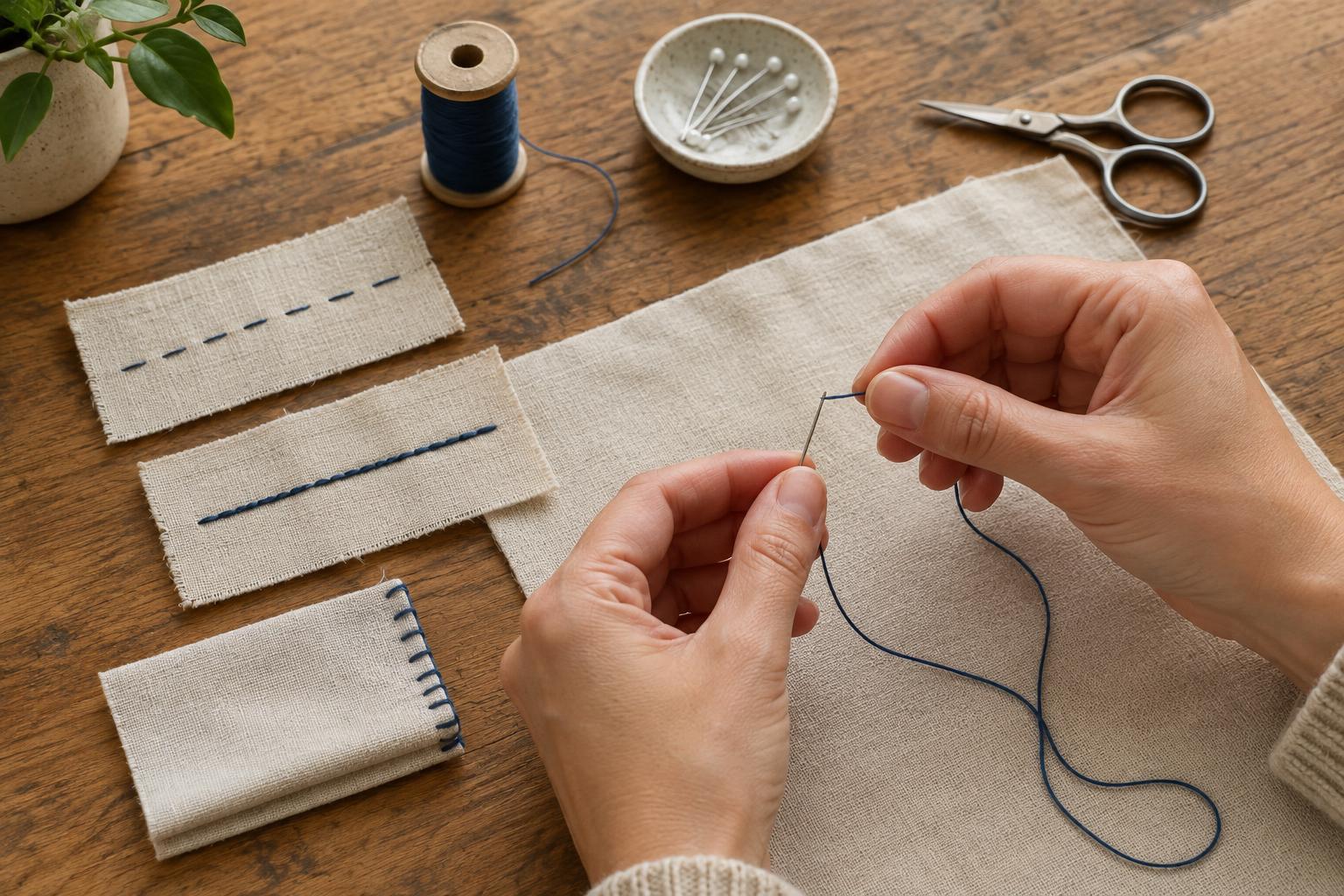
Read article · 4 min↗A needle, thread and scrap of fabric are enough to begin. Learn how to thread a needle, then practice running stitch, backstitch and whip stitch on simple projects.
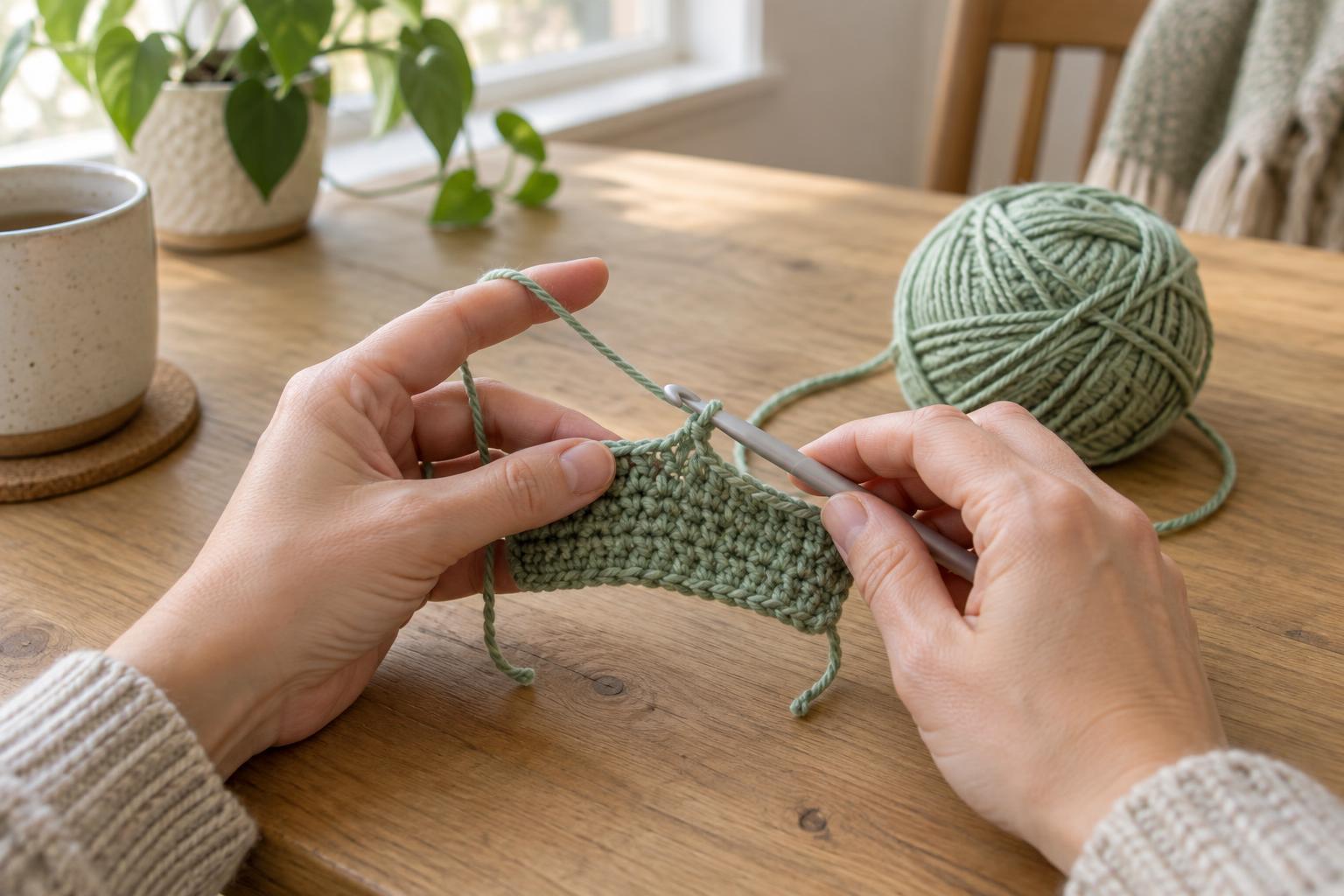
Read article · 4 min↗Start crocheting with a small practice swatch. Learn how to hold the hook and yarn, make an even foundation chain, and turn that chain into a first row of single crochet stitches.
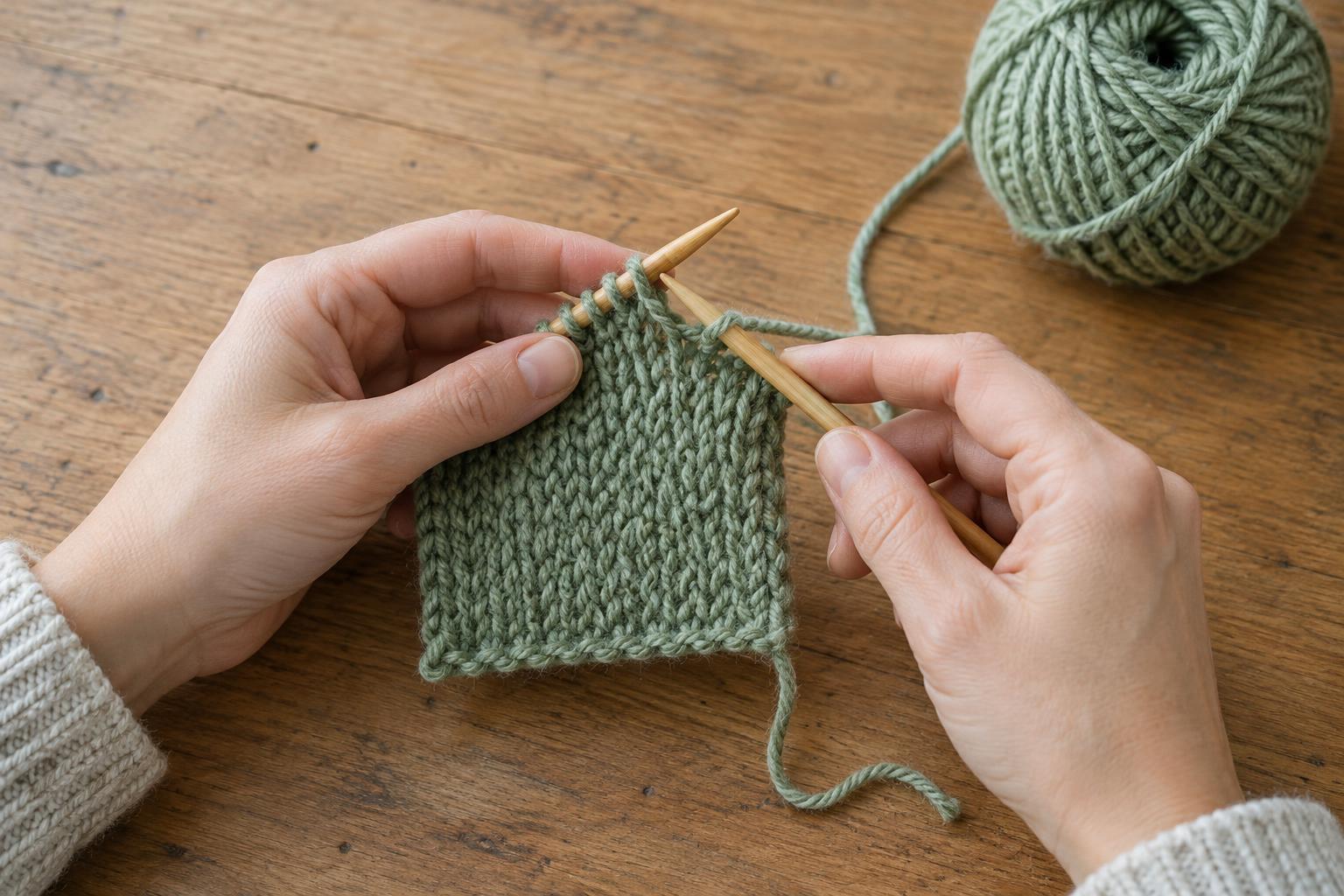
Read article · 4 min↗A small knitted square is a manageable first project. Learn a knitted cast-on, practise the knit stitch, then bind off and tidy the yarn ends. The aim is to understand each step, not to make every stitch perfect.
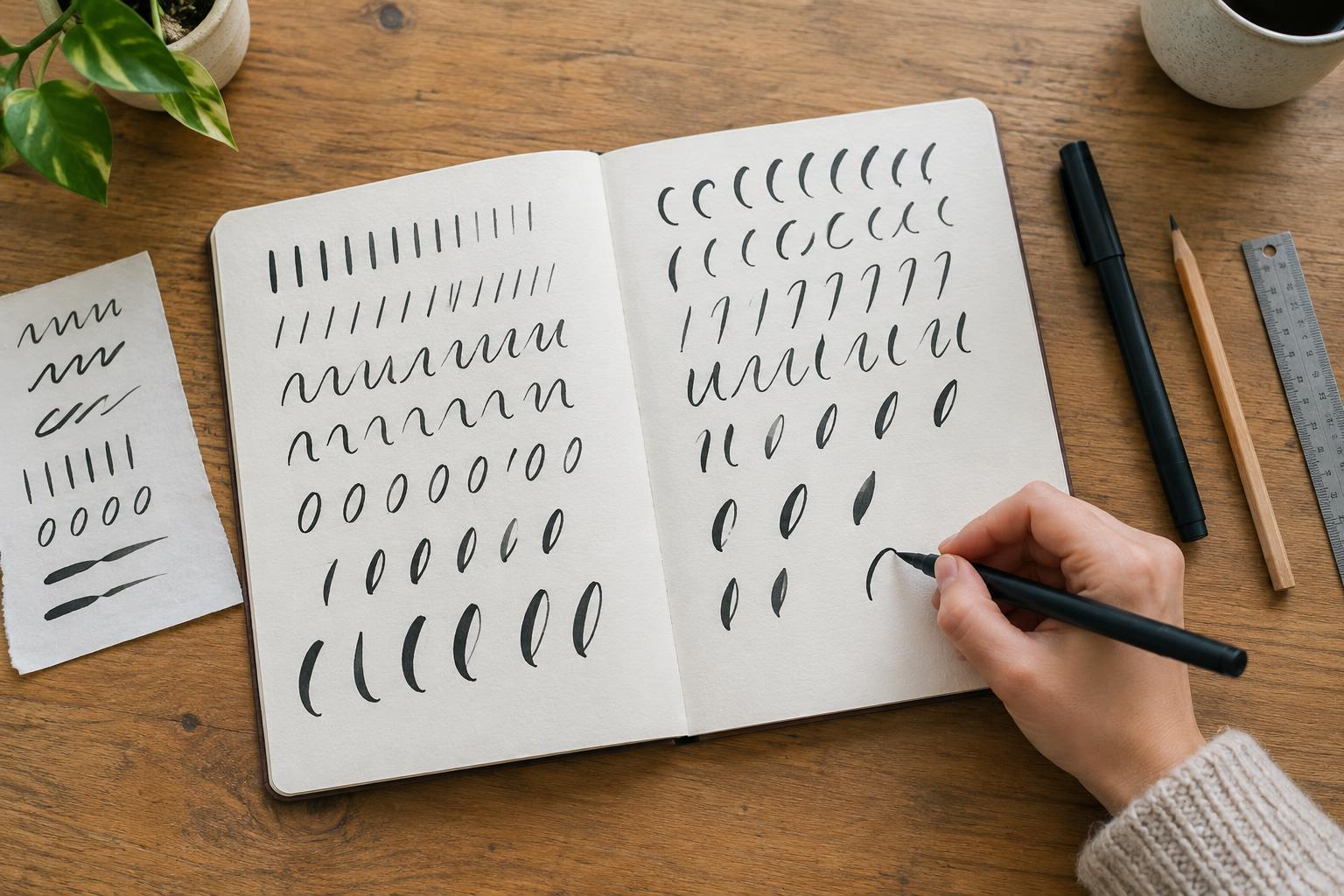
Read article · 4 min↗Hand lettering improves through observation and repeatable practice, not by making every page look finished. Learn how to spot common problems with spacing, shape, pressure and pace, then build a short routine you can keep.
Read article · 4 min↗A short scene can begin with something as ordinary as a damp sleeve, a misplaced key or a chair left facing the wrong way. Learn how to turn one small observation into a character, a choice and a scene you can finish.
Read article · 4 min↗A natural-looking edit can make a photo clearer without making skin, skies, or textures look artificial. Learn a simple workflow for adjusting light, color, sharpness, and noise while keeping the details that give an image its character.
Read article · 4 min↗You do not need elaborate equipment to make more satisfying phone photos. Learn to notice the direction of light, simplify the frame, choose a clear point of focus, and practice each skill with a short, repeatable exercise.
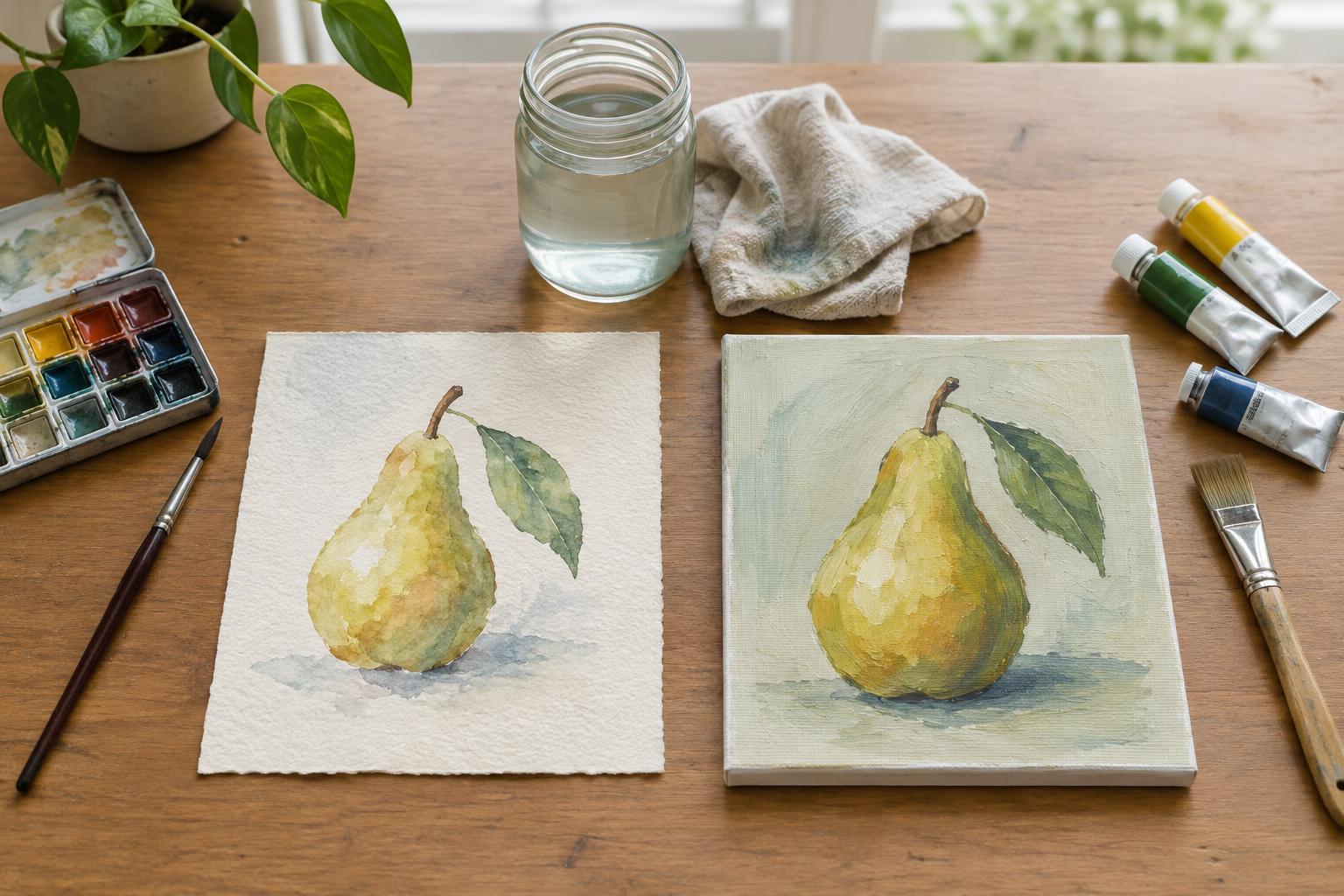
Read article · 4 min↗Acrylic and watercolor can both be beginner-friendly, but they reward different habits. Compare how they behave, what supplies you need and how to test each one before committing to a first project.
Read article · 4 min↗Watercolor becomes easier to understand when you watch three things: how wet the paper is, how much pigment is in your brush, and when each layer dries. These simple exercises help you practice washes, edges, and layers without trying to make a finished painting.
Read article · 4 min↗You do not need an elaborate setup to practice observational drawing. A mug, a lamp, or a pair of shoes can help you learn to see basic shapes, compare proportions, and describe light with simple shading. This guide offers a manageable routine and exercises you can repeat as your eye develops.
Read article · 4 min↗You do not need a room full of supplies to begin making things. Choose a hobby you can try with what you have, set a modest spending limit, and finish one small project before deciding what to buy next.
Read article · 3 min↗You can be clear and useful without pretending to know the answer. Learn how to separate facts from assumptions, choose qualifiers that mean something, and explain what you will check next.
Read article · 4 min↗A useful recap tells people what was decided, who will do what, and which questions remain open. Learn a simple way to capture the discussion, write a concise follow-up, and give the group a chance to correct misunderstandings.
Read article · 3 min↗Clear instructions help a reader move from a starting point to a finished result without having to guess what you meant. Learn how to define the task, write usable steps, handle decisions, and test your draft with someone new to the process.
Read article · 4 min↗Small talk does not require a clever opening or a long conversation. Learn how to start with what you share, keep an exchange going without turning it into an interview, notice when it is time to leave, and close politely.
Read article · 4 min↗A misunderstanding can turn a small mix-up into a tense conversation. Learn a practical way to check what happened, explain what you meant, listen to the other person, and agree on a next step without making either person the villain.
Read article · 4 min↗The words you choose matter, but so do the pace of your voice, your posture, and the space you give someone to respond. Learn how to notice these signals, use them more deliberately, and check your assumptions instead of trying to read minds.
Read article · 4 min↗A short presentation is easier to prepare when you know what listeners should remember. Choose one main point, build a simple outline around it, and practice aloud so you can adjust your words and timing.
Read article · 4 min↗You do not have to think out loud to be useful in a meeting. Prepare a few points, ask questions that create thinking space, and follow up when your best idea arrives later.
Read article · 4 min↗A useful request for help gives someone enough context to understand the problem without asking them to read your entire history. Learn what to include, how to make a clear request, and when to stop gathering details and ask.
Read article · 4 min↗A useful apology names what happened, acknowledges its impact, and makes room for the other person’s response. Learn how to pair clear words with a repair plan you can actually follow.
Read article · 4 min↗Disagreement does not have to become a contest. This practical framework helps you prepare, describe the issue clearly, listen for what matters to the other person, and agree on a useful next step.
Read article · 4 min↗A polite no does not need a long defense. Learn how to give a clear answer, choose a brief explanation, handle follow-up requests and stay courteous without accidentally agreeing.
Read article · 4 min↗Criticism can contain useful information without being entirely fair or accurate. Learn how to pause, ask for specifics, decide what to accept, and respond without surrendering your judgment.
Read article · 4 min↗Constructive feedback is easier to understand when it points to an observable moment, explains its effect, and opens a conversation about what to do next. Learn how to prepare examples, choose a useful time, and keep the exchange focused on improvement.
Read article · 3 min↗The best communication channel depends on the job your message needs to do. Use a few practical questions to decide when to send an email, start a chat, make a call, or bring people together—and when to switch channels.

Read article · 4 min↗A useful email helps the reader understand why you are writing, what they need to know, and what should happen next. Use this practical approach to make everyday requests, updates, and decisions easier to act on.
Read article · 4 min↗Plain language helps readers understand what you mean and what to do next. Learn how to spot vague phrases, simplify crowded sentences, keep useful detail, and revise a message without making it sound blunt.
Read article · 4 min↗A clear explanation starts with a useful question: what does this person already understand? Learn how to find a starting point, choose the right amount of detail, use examples carefully and check whether your message landed.

Read article · 4 min↗Open questions invite explanation; closed questions help confirm a specific point. Learn how to choose between them, combine them naturally, and avoid turning a conversation into an interview.
Read article · 4 min↗Active listening is less about finding the perfect response and more about giving someone room to explain what they mean. Learn three practical habits—reflecting, pausing, and checking your understanding—and try them in an everyday conversation.
Read article · 4 min↗Recommended

A useful wardrobe addition does not have to change your style. Sometimes it gives you another way to wear what is already there: a scarf that softens a dark coat, a shawl that makes a familiar dress feel right for an evening out, or a square scarf that brings a little colour to a plain shirt. UniqueYou focuses on women’s scarves, shawls, wraps and square scarves, with options across silk, cashmere and wool categories. The practical question is not which accessory looks most impressive on its own. It is which one you can imagine reaching for when you get dressed.



Before choosing a scarf, lay out three outfits you actually wear: perhaps your everyday coat and knitwear, a work outfit, and something you keep for dinners or celebrations. Notice the colours and necklines that appear more than once. A scarf that works with two of those outfits has a clearer role than one chosen only because it looks striking in isolation. This small exercise also reveals whether you need warmth, a light finishing layer, or colour near your face.
UniqueYou’s approach suits this kind of decision. Its accessories are intended to complement a woman’s existing wardrobe rather than require a complete reinvention of it. That does not mean every choice should be quiet. A bright scarf can be the most useful piece in a wardrobe of dark coats and simple tops. The point is to give it a job: tie together colours you already wear, add contrast where an outfit needs it, or make a familiar combination feel more considered.

Scarves, shawls, wraps and square scarves solve slightly different dressing problems. A long scarf can sit inside a coat collar or hang loosely over a jumper. A broader shawl or wrap can cover the shoulders when the outfit calls for an extra layer. A square scarf can be folded into a compact neck detail, which may appeal when you want colour without much bulk. These are starting points, not rules; the most useful shape is the one you will feel comfortable wearing.
Try a quick comparison before settling on a format. Imagine the accessory with your most-worn outer layer, then with an outfit that has no coat at all. Will the length get in the way of a bag strap? Is there enough fabric for the drape you want, or more than you enjoy managing? Thinking through ordinary movements—walking, sitting, putting on a jacket—often tells you more than an elaborate styling idea that looks good only while you stand still.
UniqueYou has silk, cashmere and wool categories, but a category name is not a substitute for checking an individual product’s composition. Materials and blends can vary by item. If fibre content matters to you because of feel, care, warmth or a recipient’s preferences, read the product information for the particular scarf you are considering. Do not assume that everything within a named category has the same composition or behaves in exactly the same way.


Think about use as well as material. A scarf you hope to wear under a fitted coat needs to feel manageable around the neck; a piece for draping over a dress may need enough width to sit comfortably on the shoulders. Texture matters, too: a smooth surface gives a different effect from a visibly soft or substantial one. If you already own a scarf you like wearing, compare its dimensions and feel with the details of the new piece. Familiar reference points make an unfamiliar product easier to assess.


Pick two colours that already appear often in your wardrobe, then decide whether the scarf should repeat one of them or provide contrast. Repetition can make an outfit feel calm and connected: a shade drawn from a coat, skirt or pair of shoes may be enough. Contrast can give a plain outfit a clear focal point. Red against navy, for example, creates a different effect from a soft neutral against the same coat. Neither approach is inherently better; it depends on what you enjoy wearing.
Pattern deserves a similar test. Stripes or checks can add interest to a simple outfit, while a solid colour may be easier to combine with a printed blouse or textured jacket. If you are unsure, photograph the clothes you expect to pair with the scarf and look at them together. The exercise takes a minute and can expose a mismatch you might overlook while viewing an accessory by itself. It can also reassure you that an unexpected colour has a place among familiar pieces.
You do not need a collection of complicated knots to make a scarf useful. Try one loose drape, one simple loop and one folded arrangement that stays out of the way. Test each with the coat or neckline you wear most often. If an arrangement needs constant adjustment, it may not suit that outfit or that scarf. A comfortable, repeatable way of wearing an accessory is worth more in daily life than a clever arrangement you never choose on a busy morning.
For a broader shawl, try it across both shoulders, then over just one shoulder, and see which version works with your sleeves and bag. For a square scarf, experiment with a narrow fold and a looser one; the same piece can create a different amount of colour near the face. Treat this as a small creative exercise rather than a test of style. Spend ten minutes with clothes you already own, take a few photos, and keep the combinations that feel like you.
A scarf can be a thoughtful gift because it does not require the same fit decisions as many garments, but it still calls for observation. Notice whether the recipient wears scarves at all, which colours recur in her wardrobe, and whether she favours compact neckwear or generous layers. A person who always wears simple outfits might welcome a patterned accent—or might prefer a quiet shade she can use often. Her habits are a better guide than a general rule about what a gift ought to look like.
When you cannot check those habits directly, choose a clear purpose rather than trying to guess every preference. You might look for a light accent for a frequently worn jacket, or a wrap that could accompany a particular dress. Check the item’s dimensions and material details, and consider whether its care requirements would suit the recipient’s routine. A short note explaining the outfit or occasion you had in mind can make the choice feel attentive without suggesting that she must wear it a certain way.
The same accessory can look different with different clothes, but occasions can still help narrow a choice. For everyday wear, think about how a scarf sits with a coat, whether you will carry it indoors, and how easily you can arrange it before leaving home. For a dinner or celebration, you may care more about how a shawl falls over a dress and whether it adds the amount of coverage you want. Neither setting requires a special rule; each asks a different practical question.
If you are choosing for a specific outfit, put the outfit on rather than relying on memory. Look at its neckline, sleeves and overall colour balance. A broad wrap may complement a simple dress but compete with prominent shoulders or detailed fabric. A compact scarf may introduce colour without hiding the garment beneath it. This is the same kind of project planning that works elsewhere in life: define the situation, identify the constraint, and choose a tool that fits.
UniqueYou began in 2014 with scarves and clothing. Its story includes a pause and a return after the domain was recovered, so it is more accurate to describe a beginning and a return than uninterrupted trading. The original brown wordmark carried a horse motif and the words “Since 2014”; a neutral taupe palette is part of its visual identity. Those details offer context for the brand’s understated presentation, but they do not tell you how any particular scarf will feel or fit your wardrobe.
For a useful decision, keep the brand story in proportion. Start with the type of accessory you want, then examine the individual item’s colour, size, composition and suggested use. UniqueYou’s emphasis is on elegant, accessible accessories that can sit alongside clothes a woman already owns. That is a practical direction, not a promise that every design will suit every person. Your own preferences, climate, routine and existing clothes remain the final measure.
A small decision process can keep browsing focused. First, name the outfit or person the scarf is for. Second, decide whether its main task is warmth, shoulder coverage, colour or a compact finishing detail. Third, check the dimensions and composition of the specific item. Finally, picture two realistic occasions when it might be worn. If you cannot identify even one convincing pairing, it may be worth reconsidering the colour, shape or scale.
Do not turn the checklist into a demand for a perfect purchase. Clothes are personal, and an accessory can be useful in an unexpected way. The aim is to replace vague hope with a few grounded questions. This approach also makes it easier to compare regional collections: you can follow the category that matches your task without assuming that its name alone answers every question about an individual product.
UniqueYou has 20 regional domains, 21 regional-language versions and 16 distinct languages. Those figures differ because countries can share a language: German appears in Germany and Austria, for example, while English serves several countries. The United Arab Emirates has an Arabic root version and an English version at /en on the same domain. Each destination below is identified by country and language so you can choose the version you intend to read; the collection descriptions are starting points, not claims about every item within them.
For the Polish-language destination in Poland, start with the local UniqueYou homepage — UniqueYou. It is the broad starting point if you have not yet decided which shape of scarf would work with your clothes.
If wool is the material category you want to investigate, the Polish-language merino-wool scarf collection is available through UniqueYou — UniqueYou. Check the composition of any individual piece before choosing it.
Germany’s German-language UniqueYou homepage is here — UniqueYou. For a narrower starting point, the German-language wool-scarf collection is reached through UniqueYou — UniqueYou.
If a pattern would give your plain coats more interest, the German-language striped-scarf collection has its own local address — https://uniqueyou-store.de/collections/schals-mit-streifen. Compare the stripe colours with clothes you already wear.
The Czech-language UniqueYou homepage for Czechia is here — UniqueYou. Begin there if you want to compare accessory shapes before settling on a collection.
For a more compact neck accessory, the Czech-language cotton neck-scarf collection is reached through UniqueYou — UniqueYou. Look at the individual item’s size and composition as well as its colour.
Spain’s Spanish-language UniqueYou homepage is here — UniqueYou. If you already know you want a strong colour accent, UniqueYou also provides a Spanish-language red-scarf collection — UniqueYou.
For a patterned alternative, the Spanish-language checked-scarf collection is reached at its local address — https://uniqueyou.es/collections/bufandas-de-cuadros. Consider whether checks will sit comfortably alongside the patterns you already own.
The French-language UniqueYou homepage for France is here — UniqueYou. It is a useful starting point when you are still weighing a scarf against a broader wrap.
To focus on scarves, the French-language scarf collection is reached through UniqueYou — UniqueYou. Compare potential choices with the necklines and outerwear you wear most.
Hungary’s Hungarian-language UniqueYou homepage is here — UniqueYou. Use it to orient yourself before choosing an accessory for a particular outfit.
If you are interested in scarf-like pieces that can add a smaller accent, the Hungarian-language kerchief collection is reached through UniqueYou — UniqueYou. Check dimensions before imagining a particular fold.
The Italian-language UniqueYou homepage for Italy is here — UniqueYou. For an accessory to drape with a dress, the Italian-language silk-stole collection is reached through UniqueYou — UniqueYou.
If a different material category interests you, the Italian-language cashmere-scarf collection has its own local address — https://uniqueyou.it/collections/sciarpe-in-cashmere. Read each item’s composition rather than inferring it from the collection name.
Romania’s Romanian-language UniqueYou homepage is here — UniqueYou. It gives you a broad place to begin if you are choosing between a neck scarf and a larger layer.
For the wool category, the Romanian-language wool-scarf collection is reached through UniqueYou — UniqueYou. Size and individual product details will help you judge how a piece might work with your coat.
The Slovak-language UniqueYou homepage for Slovakia is here — UniqueYou. Start there to compare what kind of accessory would earn a place in your routine.
If you are considering a softer-looking shoulder layer, the Slovak-language cashmere-shawl collection is reached through UniqueYou — UniqueYou. Check each product’s stated materials and dimensions.
Finland’s Finnish-language UniqueYou homepage is here — UniqueYou. Decide first whether you need something for the neck or a piece that can sit across the shoulders.
For the latter purpose, the Finnish-language large shoulder-scarf collection is reached through UniqueYou — UniqueYou. Its name can guide your search, while individual dimensions should guide your choice.
The Swedish-language UniqueYou homepage for Sweden is here — UniqueYou. If you want to explore a particular material category, the Swedish-language cashmere-shawl collection is reached through UniqueYou — UniqueYou.
For a broader scarf starting point, the Swedish-language scarf collection has a separate local address — https://uniqueyou-store.se/collections/scarfar. Think about whether the scarf will mainly accompany a coat or an indoor outfit.
Denmark’s Danish-language UniqueYou homepage is here — UniqueYou. For pattern, the Danish-language striped-scarf collection is reached through UniqueYou — UniqueYou.
If you would rather compare scarves more broadly before choosing a pattern, the Danish-language scarf collection has its own local address — https://uniqueyou.dk/collections/halstorklaeder. A quick check against your usual coat colour can narrow the field.
The Dutch-language UniqueYou homepage for Belgium is here — UniqueYou. This destination is identified by both country and language because another regional version also uses Dutch.
For a direct category starting point, the Belgian Dutch-language scarf collection is reached through UniqueYou — UniqueYou. Judge a candidate by its pairing with your own clothes, not just its standalone appearance.
Austria’s German-language UniqueYou homepage is here — UniqueYou. For a neck accessory, the Austrian German-language neckerchief collection is reached through UniqueYou — UniqueYou.
If you are looking for a clear colour accent, the Austrian German-language red-scarf collection has its own local address — https://uniqueyou.at/collections/schals-in-rot. Try the idea against two outfits before deciding how often you might wear it.
The Dutch-language UniqueYou homepage for the Netherlands is here — UniqueYou. For a strong accent, the Netherlands Dutch-language red-scarf collection is reached through UniqueYou — UniqueYou.
For another direction, the Netherlands Dutch-language light-scarf collection has a separate local address — https://uniqueyou.nl/collections/lichte-sjaals. Consider the scale and feel of an individual piece before choosing it for a particular season.
The English-language UniqueYou homepage for the United States is here — UniqueYou. It is a starting point for comparing the shapes and colours that might work with your everyday wardrobe.
If you want to examine one material category first, the US English-language cashmere-scarf collection is reached through UniqueYou — UniqueYou. Read the details of the specific item that interests you.
The Arabic-language UniqueYou root destination for the United Arab Emirates is here — UniqueYou. It is distinct from the English version on the same regional domain.
If a generously sized shoulder layer is what you have in mind, the Arabic-language large cashmere-scarf collection is reached at its local address — https://uniqueyou.ae/collections/أوشحة-كبيرة-من-الكشمير. Check each item’s dimensions and composition.
The English-language UniqueYou destination for the United Arab Emirates is here — UniqueYou. It uses the /en version rather than the Arabic root, so choose it when English is the language you want for browsing.
The wardrobe test remains the same in either language: identify the clothes you want to pair with a scarf, then check the details of the individual piece.
Ireland’s English-language UniqueYou homepage is here — UniqueYou. If a vivid accent is your priority, the Irish English-language red-scarf collection is reached through UniqueYou — UniqueYou.
For a shoulder layer instead, the Irish English-language cashmere-shawl collection has its own local address — https://uniqueyou.ie/collections/cashmere-shawls. Think about how its dimensions would work with the outfit you have in mind.
The English-language UniqueYou homepage for the United Kingdom is here — UniqueYou. Begin with the outfit or occasion you are dressing for, rather than assuming one accessory suits every setting.
If you want a layer that can be draped over the shoulders, the UK English-language shawl collection is reached through UniqueYou — UniqueYou. Check each piece’s size, material details and colour.
Portugal’s Portuguese-language UniqueYou homepage is here — UniqueYou. For smaller scarf-style accents, the Portuguese-language scarf collection is reached through UniqueYou — UniqueYou.
If you are planning an outfit around a dress or wedding, the Portuguese-language collection for scarves for dresses and weddings has its own local address — https://uniqueyou.pt/collections/echarpes-para-vestidos-e-casamentos. Use the occasion as a guide, then assess the individual item.
The best scarf choice is one you can picture in your own life. Start with the clothes you wear, decide what the accessory should do, and let the details of the individual piece settle the decision.