Choose a song you can work with
Pick a song you want to hear more than once, but keep your first goal modest. A short melody, a repeated chord pattern or one verse may be a better starting point than an entire arrangement. If you are new to your instrument, look for a version with a comfortable range and few unfamiliar techniques. Simplifying a song is not cheating: it gives you something complete enough to play while leaving room to add detail later.
Before practicing, listen to the song or play through the music once without stopping. Notice where sections repeat and where your hands, breath or timing feel uncertain. Then define what “learned” means for this attempt. You might aim to play the main melody at a steady, relaxed pace, rather than match a recording exactly. A clear, limited goal makes it easier to decide what belongs in each session.
Divide the song into small phrases
Mark the song into pieces you can recognize and remember: perhaps two measures, one lyric line or a single change between chords. Name them A, B and C, or jot down their first notes. Start with a phrase short enough that you can try it several times without losing your place. If it contains a difficult jump or finger change, make that movement its own tiny practice unit.
Work on one unit slowly. First identify the notes, chords or rhythm; then play it with attention to comfortable movement. After a few attempts, pause and ask what changed. If the same mistake keeps appearing, stop repeating the whole phrase. Practice the moment just before and just after the mistake, so the transition becomes familiar. Once two adjacent phrases feel reasonably steady, join them together. You do not need perfection before moving on, but try not to rush past a problem you cannot yet identify.
Give each short session one job
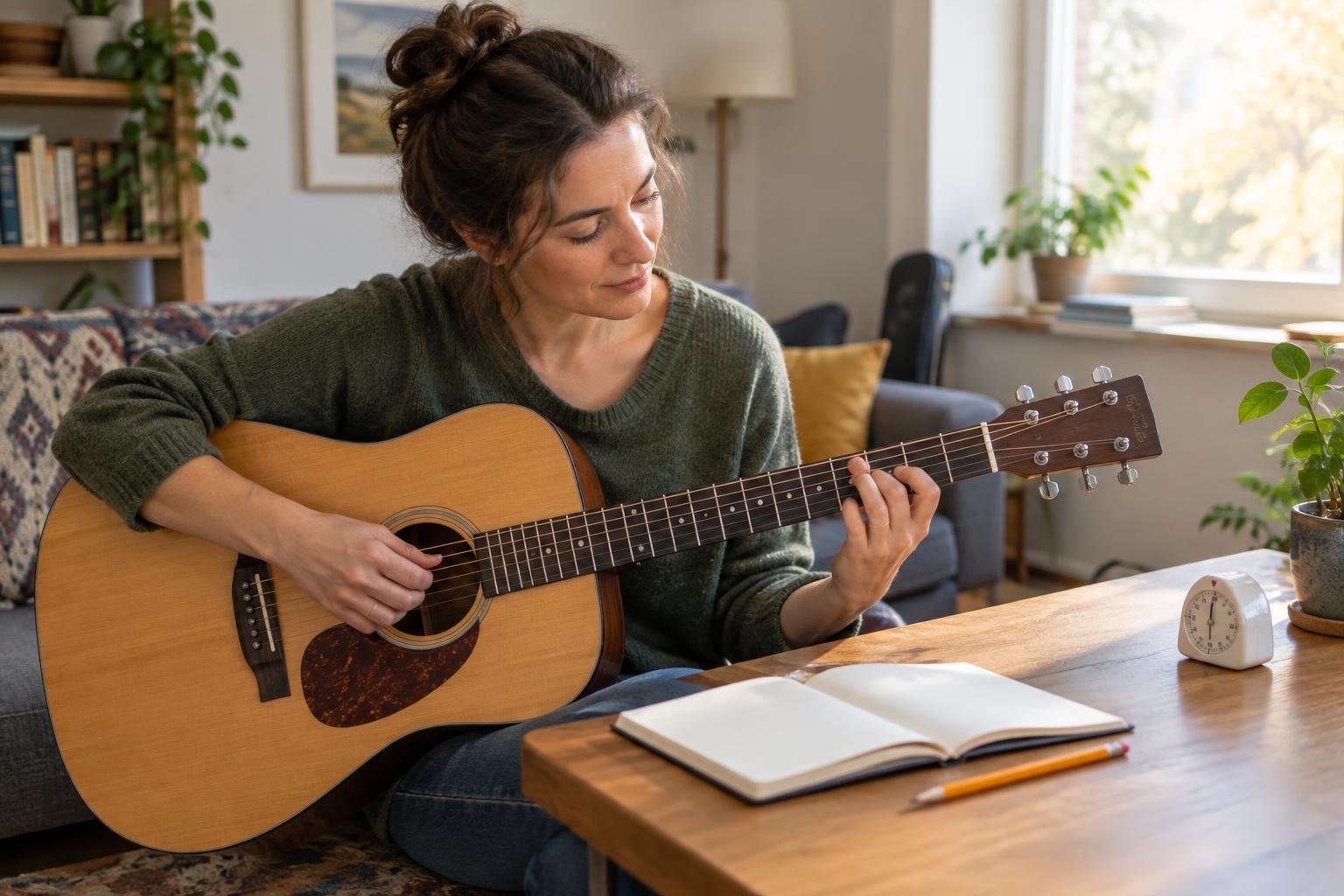
A useful session might last ten to fifteen minutes, though even a few attentive minutes can help you stay connected to the song. Begin by playing something easy to settle in. Spend most of the time on one specific task, such as the rhythm of phrase B or a clean change between two chords. End by playing a section you can already manage, or by trying the new phrase once in context.
Keep the task narrow enough that you can tell whether you worked on it. “Practice the song” is vague; “play the first two phrases slowly without pausing between them” gives you a clear focus. A metronome may help if you tend to speed up, but you can also count aloud or tap a steady beat. Choose a pace at which you can notice your movements. Speed is an option to explore after the notes and transitions are more dependable.
Short sessions are not a test of how much you can accomplish at once. If your attention fades or your hands become tense, take a break. A session can end with an unfinished passage and still be useful if you know exactly where to resume.
Make the next session easy to start
Leave yourself a brief note after practicing. Record the phrase you worked on, the part that felt awkward and one action to try next time. For example: “Phrase C: pause before the last chord; practice the final two changes slowly.” This is more useful than a general judgment such as “still bad,” and it saves you from spending the next session deciding where to begin.
On another day, play a familiar phrase before returning to the difficult one. This gives you a quick way back into the song and lets you check what you remember without reading your notes immediately. You may find that a passage needs another slow session. That is normal. Keep the practice unit small, and change your approach if repeating it is no longer helping: speak the rhythm, play just one hand or isolate the movement without the rest of the song.
Put the pieces together without rushing
When you can play the separate phrases, try connecting larger sections. Play from the end of one phrase into the beginning of the next, then add more only when that connection feels manageable. Occasional full play-throughs can show you where the song still breaks down, but they should not replace focused work on those spots.
Finally, play the song for your own enjoyment, even if you use a slower tempo or a simplified version. Notice what you can do now and choose one detail to refine, such as a smoother rhythm or a more expressive ending. Learning a song is not a single pass from mistakes to perfection. It is a sequence of small decisions that helps you keep playing while gradually making the music your own.