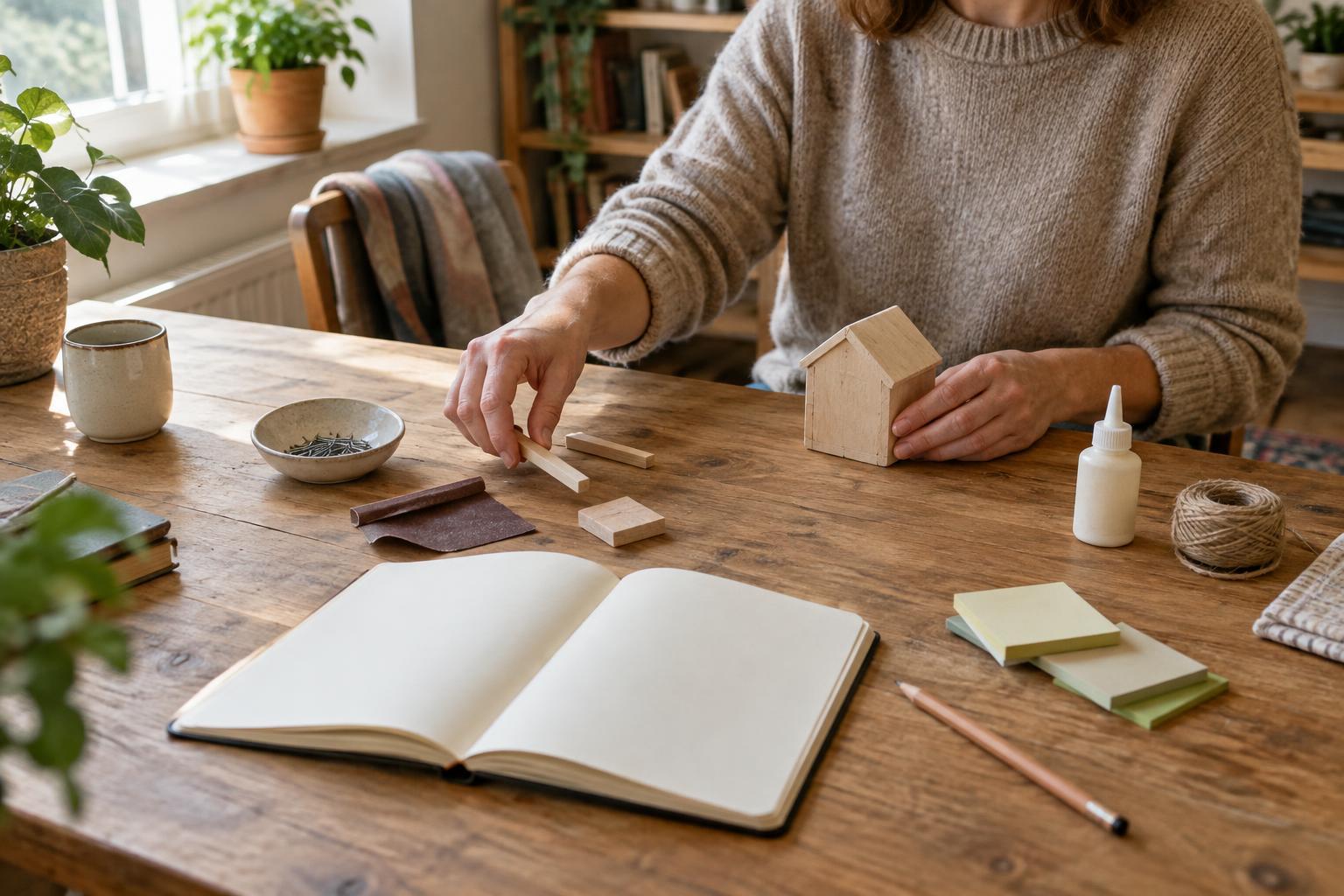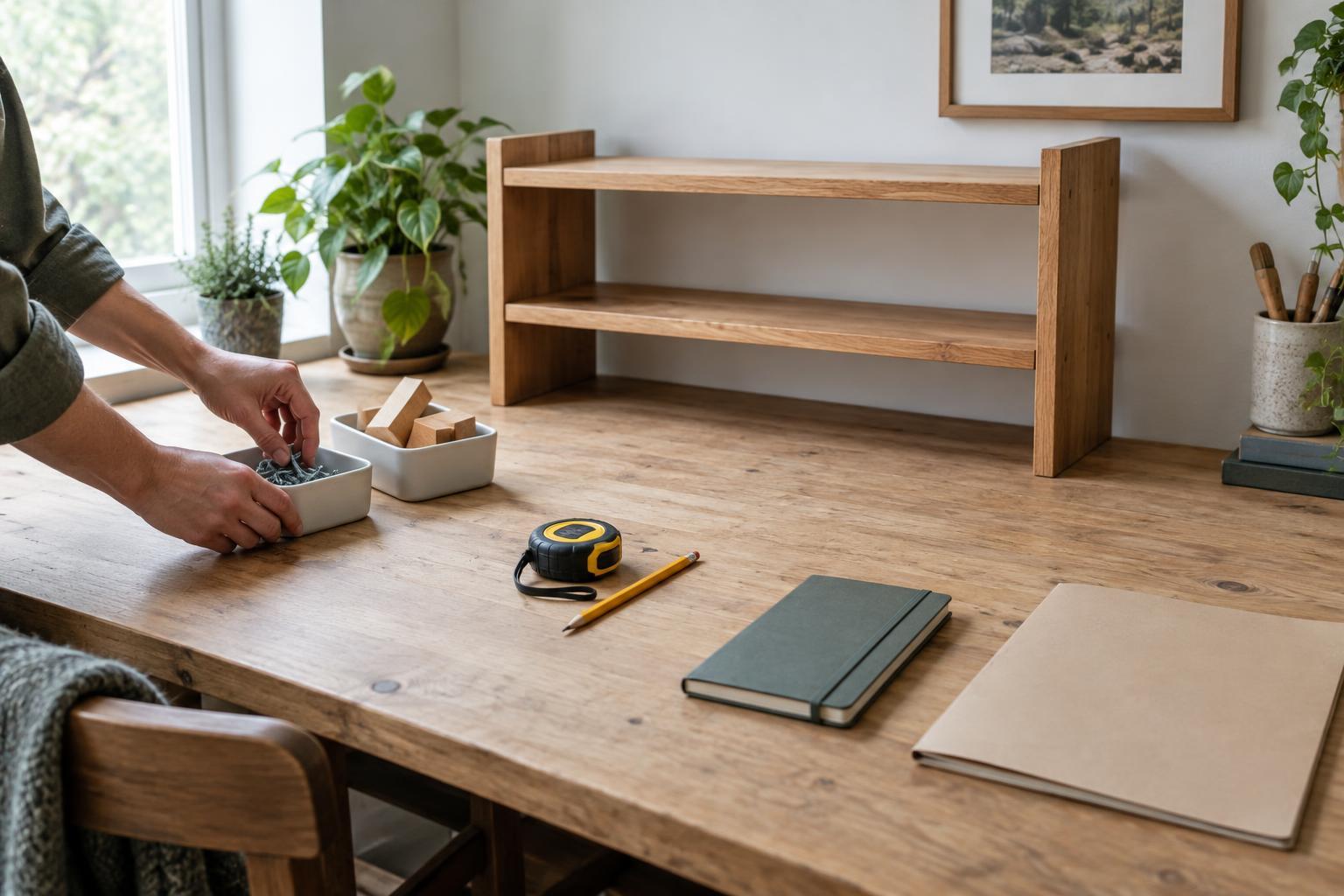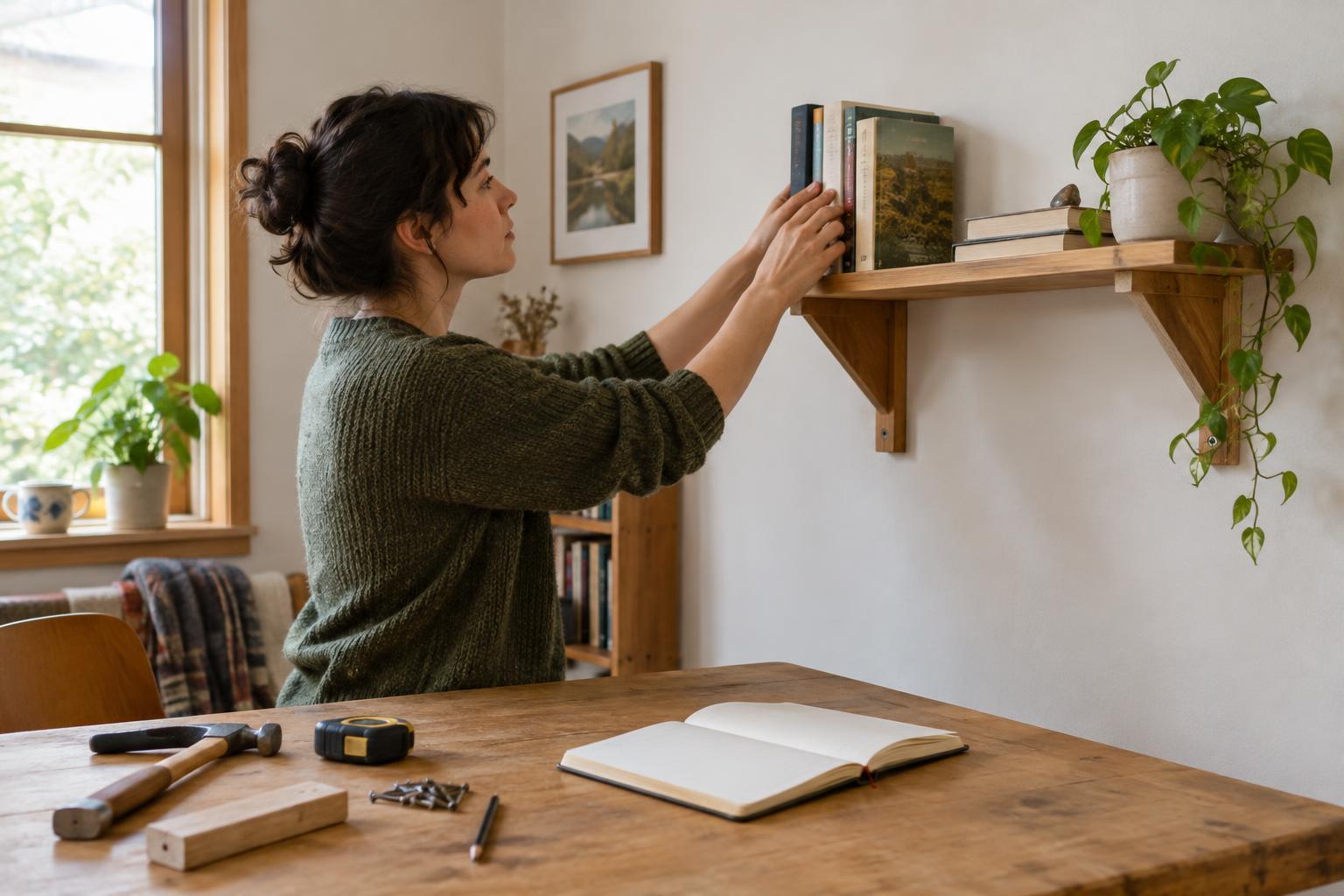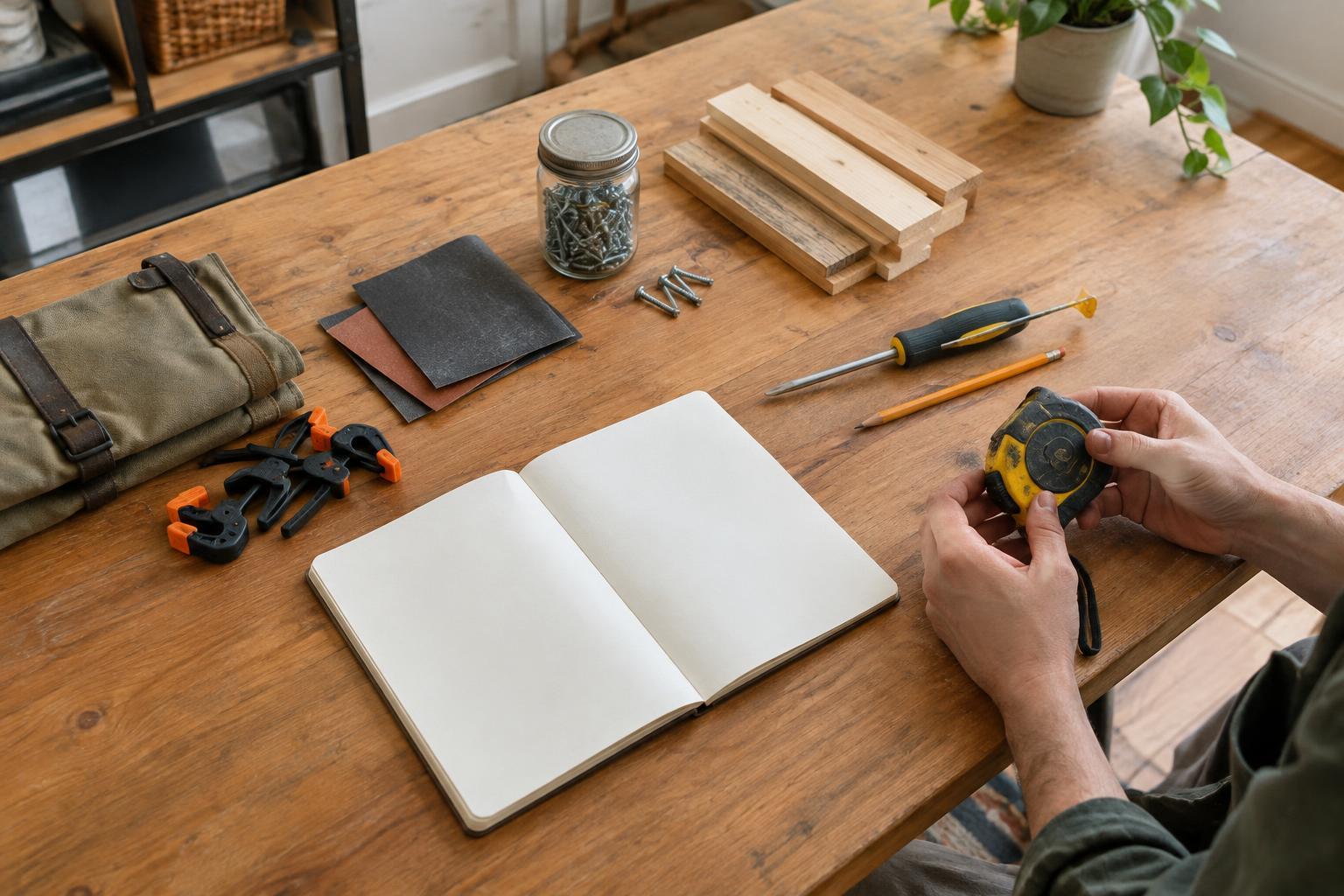
Start with the next step, not a shopping list
A new project can make every missing item feel urgent. You picture the finished shelf, photo album or garden planter, then start collecting supplies for every possible stage. Before buying anything, write down the next concrete task: measuring a space, preparing a surface, making a test piece or assembling one component. A specific task gives you a clearer question to answer: what do I need to do this step?
Divide that task into actions, tools and materials. For example, a small painting project might involve protecting a table, preparing the surface, applying paint and allowing the piece to dry. That list is more useful than a broad note to “get painting supplies.” It also leaves room to discover that an old drop cloth or an existing brush will do the job.
Gather and record what you already own
Look in the places where relevant supplies tend to end up: a desk drawer, cupboard, toolbox or box of unfinished projects. Bring likely items together so you can see them. Check unopened packages as well as loose pieces; a small packet of screws or a spare notebook is easy to overlook. You do not need to organize your entire home to prepare for one project. Set a short boundary, such as checking two storage areas, and expand the search only if an important item remains unaccounted for.
Make a simple inventory with three columns: item, quantity or size, and location. Record enough detail to prevent an unnecessary purchase. “Two usable paintbrushes, one narrow and one wide, in craft box” is more helpful than “brushes.” For consumable materials, note approximate amounts rather than stopping to count every piece. A quick photo of supplies laid out together can also help when you later compare them with a project plan.
Check whether each item is fit for this project
Owning something is not the same as having what you need. Check dimensions, compatibility and condition against the task. A drill bit may be the wrong size, fabric may be too small for the pattern, or dried-out glue may not be usable. Where appropriate, try an item on a scrap or test piece before relying on it. Keep the test small so a failed attempt does not damage the main project.
Be cautious with anything damaged, unfamiliar or used for a safety-critical step. A cracked handle, frayed cord or uncertain attachment is not a good reason to press ahead simply because it is already in the house. Follow the tool’s instructions and choose a suitable replacement or another method when needed. The goal is to avoid needless purchases, not to force unsuitable materials into the plan.
Turn the gaps into a deliberate buying list
Mark each requirement as ready, needs testing, or missing. Then separate missing items into “needed for the next step” and “possibly needed later.” This keeps an idea for a future stage from becoming today’s purchase. For each item on the immediate list, write its purpose and any essential specification, such as size, finish or material. If you cannot say what a product will do in the project, pause before adding it.
Consider whether an item you own can serve the same purpose without making the work harder or less suitable. You might reuse a sturdy container to sort parts or cut a small test from leftover material. Some tools may be practical to borrow or share if you need them only briefly. Compare those options with buying based on access, condition and how often you expect to use the item. Avoid substituting materials when their specific properties are important to the result.
Make the check useful next time
When you finish a work session, put reusable tools back in a consistent place and label leftover materials with details you are likely to forget, such as size or intended project. Update your inventory if you used the last of something. A short note about what worked can be more valuable than a perfect storage system: “small clamp held this piece securely” or “need more paper before the final version” gives your future self a clear starting point.
Checking what you have is a repeatable pause, not a rule against buying supplies. It helps you spend your attention on the work in front of you. Begin with one defined task, confirm that your existing items can handle it, and buy what fills a real gap. As the project changes, repeat the check before planning the next purchase.