Start with the project, not the prices
A budget is easier to build when you know what counts as finished. Before looking up prices, write a one-sentence description of the result you want: for example, “Set up a small workspace where I can repair clothes.” Then list what the project must include to meet that description. This gives you a way to judge purchases instead of treating every appealing idea as part of the plan.
Set a spending limit you are comfortable using for this project. It may be lower than the amount you have available, especially if other needs compete for the same money. Note any fixed constraints, such as space, a deadline, or materials you already own. If the first version of the project does not fit the limit, you can reduce its scope before buying anything.
Identify the essentials
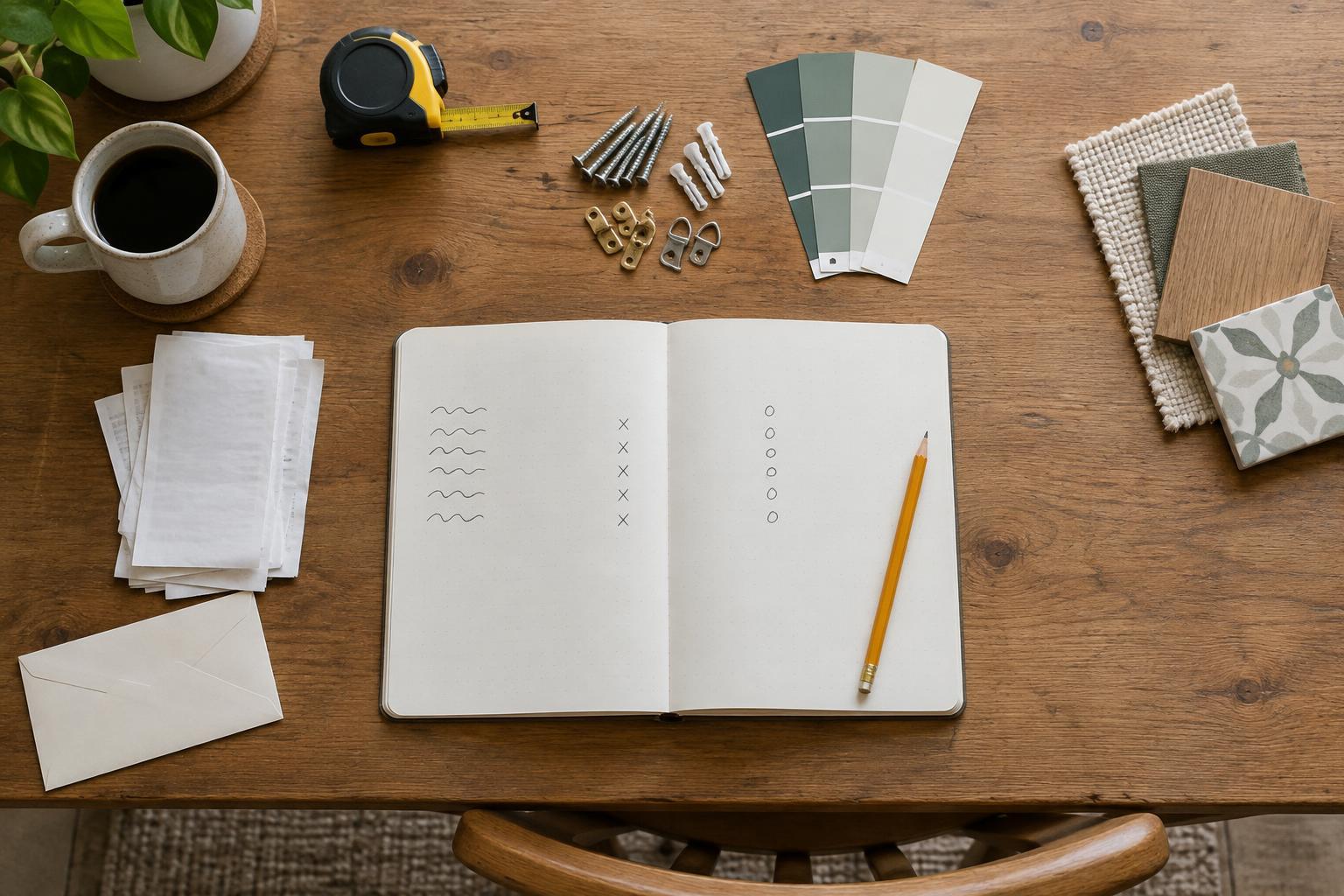
Essentials are the items or services without which the project cannot meet its basic goal. For each one, write down a quantity, an estimated cost, and what the estimate includes. A workspace project might need a suitable light, a stable surface, and a few basic tools. If you already own a usable tool, list it at no new cost rather than forgetting it or buying a duplicate.
Look beyond the main purchase. Supplies, replacement parts, delivery, and access to equipment can affect the total. Estimates do not need to be perfect, but they should be specific enough to challenge. “Materials: 80” is less useful than separate estimates for fabric, thread, and fasteners. Where a price is uncertain, record a reasonable range or a note to check it before committing. Add the essential costs to find the minimum estimated cost of the project.
Give extras their own list
Extras improve convenience, appearance, or enjoyment, but the project can succeed without them. A better storage box or a wider choice of finishes may be worthwhile; neither needs to be hidden among the essentials. Listing extras separately makes it easier to postpone them without feeling that you have abandoned the project.
Rank extras by the difference they would make to your experience. You might mark each one “useful now,” “consider later,” or “nice to have.” This is more practical than dividing the remaining money equally among them. Some extras also create follow-on costs: a new tool might require accessories or storage. Include those costs when comparing choices. If the essentials already use most of your limit, keep the extras list as a set of future options rather than a shopping list.
Make room for uncertainty
A contingency is money left unassigned for costs you cannot confidently predict. It is not an extra to spend at the start. You might discover that a measurement was wrong, a component needs replacing, or a small amount of additional material is required. The appropriate allowance depends on how familiar you are with the work and how uncertain your estimates are.
Choose the allowance before you decide which extras fit. A simple budget layout is: spending limit, minus estimated essentials, minus contingency, equals the amount available for extras. If that result is negative, revisit the plan. Can you use something you own, borrow suitable equipment, complete a smaller first stage, or change the design? Cutting the contingency to make the numbers appear to work does not resolve the uncertainty; it only leaves you fewer options if a cost changes.
Use the budget while the project is underway
Keep estimated and actual costs side by side in a note or spreadsheet. Record purchases when you make them, including small ones, and update the remaining amount. Before each new purchase, ask whether it is essential to the agreed result, an extra you chose deliberately, or a response to an unexpected problem. That short pause helps prevent gradual changes in scope from going unnoticed.
If you need to use the contingency, note what happened and revise the amount left. When costs rise, decide what to change before continuing: delay an extra, simplify a feature, or pause until you have a clearer estimate. At the end, compare the original plan with what you spent. The goal is not to prove that every estimate was exact. It is to learn which costs you overlooked, which extras mattered, and how to make the next project easier to plan.