Start with what the reader needs
Plain language is not about making every sentence short or removing every technical term. It is about helping a particular reader understand a particular message. Before revising, ask: Who will read this? What do they need to know? What, if anything, should they do afterward? Those answers give you a way to judge each sentence. A project update for a teammate may need details that a brief appointment reminder does not.
Put the main point near the beginning. Compare “Regarding the matter of the revised schedule, further discussion may be necessary” with “We need to discuss the revised schedule.” The second sentence tells the reader what the issue is and what happens next. You can add context after that: “Two tasks now depend on the same person.” Clarity often comes from ordering information well, not just swapping long words for short ones.
Replace vague words with useful details
Words such as “soon,” “appropriate,” “some,” and “improve” can be useful when precision is unnecessary. They cause trouble when readers must guess what they mean. “Please send the files soon” may leave someone unsure whether you mean this afternoon or next week. If you know the deadline, write it: “Please send the files by Thursday afternoon.” If you do not know it, say what determines the timing: “Please send the files after the client approves the draft.”
Look for sentences that name a goal but hide the action. “We should improve communication” does not tell a team what to change. “Let’s send one status update each Friday, including completed work and open questions” gives people something they can try. Avoid inventing precision to sound decisive, though. If the plan is still open, “We’ll choose a meeting time after everyone shares their availability” is clearer than a confident but unreliable promise.
Untangle complicated sentences
A sentence becomes hard to follow when it carries too many ideas at once. Notice where you have stacked conditions, background, and requests. “In light of the changes to the draft and the feedback received from the group, please consider whether additional revisions should be undertaken prior to distribution” asks the reader to work through several layers. A clearer version is: “The group sent feedback on the draft. Please review it and make any needed changes before we share the draft.”
Verbs also help readers see who is doing what. “A review of the proposal will be conducted” hides the person responsible; “Mina will review the proposal” makes the action visible, if Mina is indeed responsible. You do not always need to name a person, especially when responsibility is unknown or beside the point. The useful habit is to check whether a sentence leaves the reader asking, “Who does this?” or “What happens next?”
Keep the detail that makes the message accurate
Simplifying does not mean stripping away important limits. “Your request is approved” may be misleading if approval depends on a final check. “Your request is approved once we receive the signed form” takes a few more words but gives the reader the condition they need. Likewise, a familiar technical term may be the clearest choice for readers who use it every day. Define it when your audience may not know it, rather than replacing it with a loose description.
Tone matters, too. A direct sentence can still be considerate. “You missed the deadline” may be accurate, but “The deadline has passed, and we still need your draft” is often more useful because it focuses on the situation and the next step. Choose wording that is both honest and appropriate to the relationship. Plain language should reduce effort for the reader, not make a message sound careless.
Use a quick revision pass
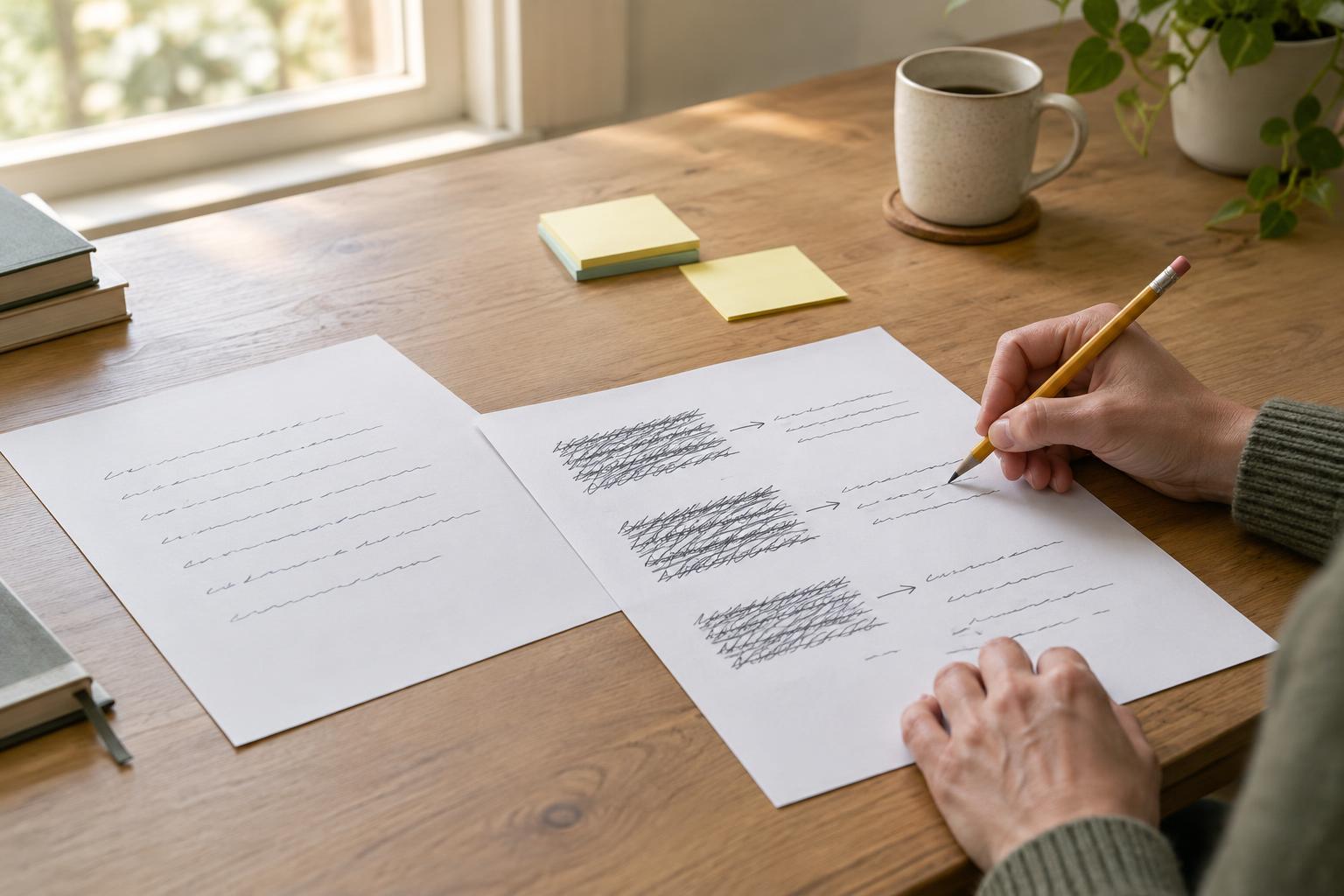
For a practical exercise, take one email or project note you have already written. Underline its main request or conclusion. If you cannot find one, write a single sentence that states it. Move that sentence toward the top, then mark any words that a reader might interpret in more than one way. Replace only the ones that affect what the reader understands or does.
Next, read the message aloud. Pause where you run out of breath or lose track of the subject; those are good places to split a sentence or restore a clear verb. Finally, check the details: Is the person, action, timing, or condition clear where it needs to be? The goal is not the fewest possible words. It is a message a reader can understand without having to ask you to explain it again.