Start with a detail you can picture
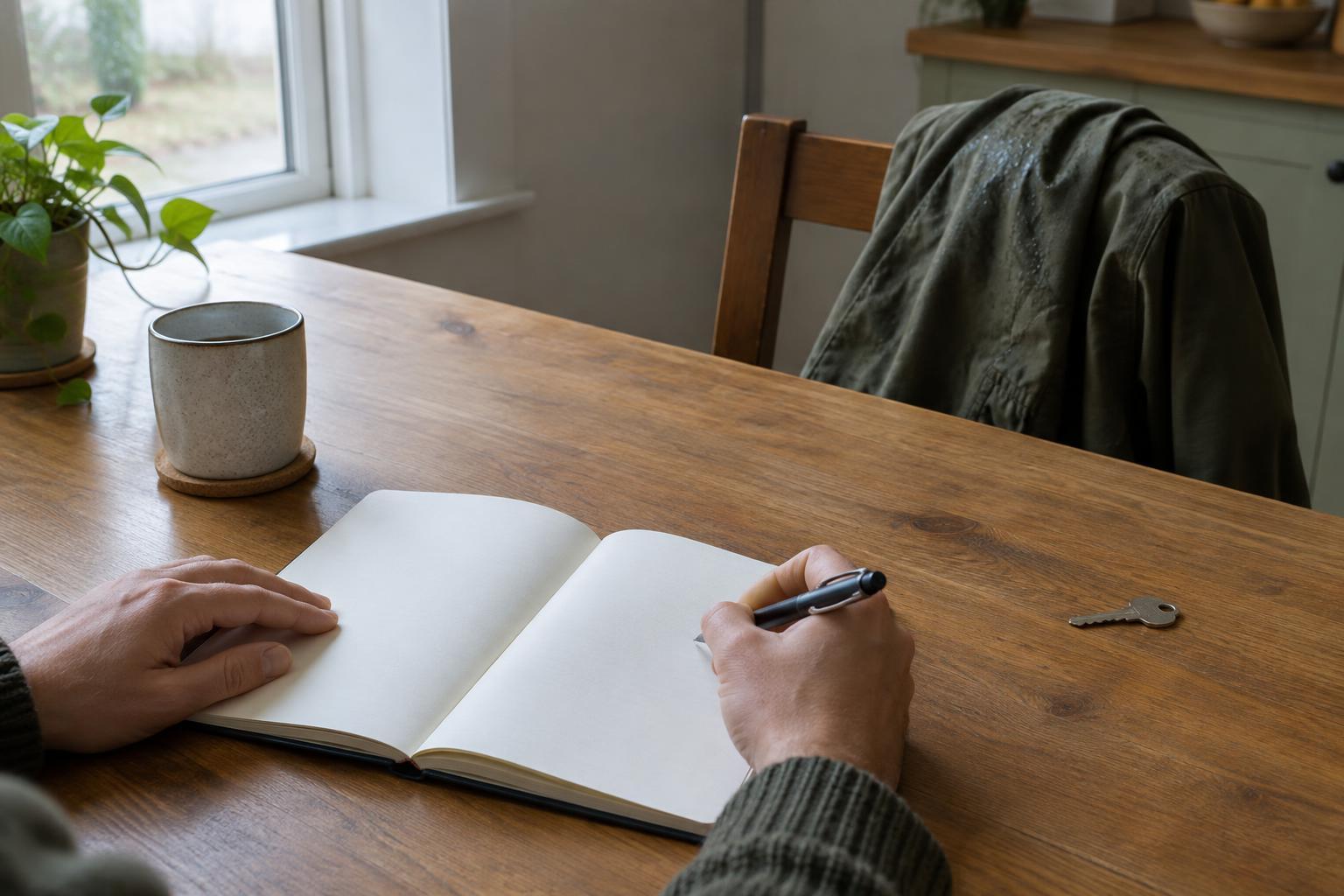
You do not need an unusual event to begin writing fiction. A small observation gives you something concrete to work with: one glove on a park bench, a cup with two teaspoons in it, or a damp sleeve on an otherwise dry coat. Notice what you can see, hear or touch before deciding what it means. The goal is not to find a brilliant idea. It is to find a detail that makes you curious.
For a quick exercise, write down five ordinary details from a place you know. They can come from memory or from a room you are in now. Choose one and describe it in a single sentence without explaining it. For example: “A chair at the kitchen table faced the wall instead of the window.” That sentence is a starting point, not a story. Resist the urge to add a dramatic backstory just yet.
Give the detail to someone
A scene begins to move when a person notices the detail and has a reason to care. Ask three questions: Who sees it? What were they trying to do before they saw it? Why does it interrupt them? The answers can be modest. Perhaps someone is setting the table before a guest arrives and finds the chair turned around. They want the room to feel welcoming, but they hesitate before moving it.
Try making two characters respond differently to the same observation. One turns the chair back without thinking. The other leaves it alone because someone deliberately moved it. Neither response needs to reveal a secret; the difference simply gives you a choice to write about. If you are stuck, pick the character whose reaction surprises you more and let that reaction guide the next few sentences.
Keep the scene inside a small moment
A short scene is easier to finish when it stays in one place and follows one immediate action. Set a boundary before you draft: the scene lasts until the guest arrives, until the character leaves the kitchen, or until they decide what to do with the chair. A boundary keeps you from explaining the character’s entire history when the present moment is enough.
Give the character a simple intention, then place one obstacle in its way. They intend to straighten the room; they cannot decide whether touching the chair would upset someone. Show the hesitation through an action: they set down a plate, reach for the chair, then hear footsteps in the hall. Actions make the uncertainty visible. You can add a brief thought, but you do not have to explain every feeling the character has.
Draft toward a small change
Now write for ten minutes without stopping to polish. Begin with the observation and follow what the character does next. Let another person enter if that helps, but keep the exchange focused on the immediate situation. A scene does not need a twist or a grand lesson. It needs something to be different at the end: the chair has been moved, the character has chosen to leave it, or a conversation has begun that they had been avoiding.
If the draft stalls, ask what the character could do with their hands. They might fold a napkin, pull out the chair or hold the door open. Then ask how another character would respond. These small physical steps can carry a scene forward more naturally than trying to invent a clever line of dialogue. Stop once the immediate choice has a consequence, even if that consequence is quiet.
Revise around what matters
After a break, read the scene and underline the first place where someone makes a choice. Could you begin closer to it? Look for sentences that explain what the reader can already understand from an action or an exchange. Keep details that help establish the setting, shape a decision or change how the reader sees the opening observation. Remove details that only delay the moment.
Repeat the exercise with a new observation, or use the same one with a different character. The chair might be a nuisance to one person and a comfort to another. That flexibility is the point of an observation-based prompt: it offers a place to start without deciding the whole story for you. With a detail, an intention and a small choice, you have enough to practice writing a complete scene.