Start with the experience you want
The most useful question is not which paint is better. It is what you want your first painting session to feel like. Acrylic paint can produce bold, opaque shapes and lets you cover many mistakes after a layer dries. Watercolor is usually more transparent: the white of the paper provides much of the light, and diluted color can spread in ways that are difficult to repeat exactly.
If you enjoy building an image in layers and changing your mind as you go, acrylic may feel reassuring. If you like leaving room for unexpected blends and working with a light touch, watercolor may be more appealing. Neither medium removes the need to practice. A small project that suits the paint will teach you more than trying to make one behave exactly like the other.
Understand how each paint behaves
Acrylic dries into a water-resistant layer. You can paint over that layer without normally lifting the color beneath it, which is helpful when adjusting shapes or adding highlights. The trade-off is that paint left on a palette or brush can dry before you use it. Begin with small amounts, and rinse brushes during your session rather than waiting until the end.
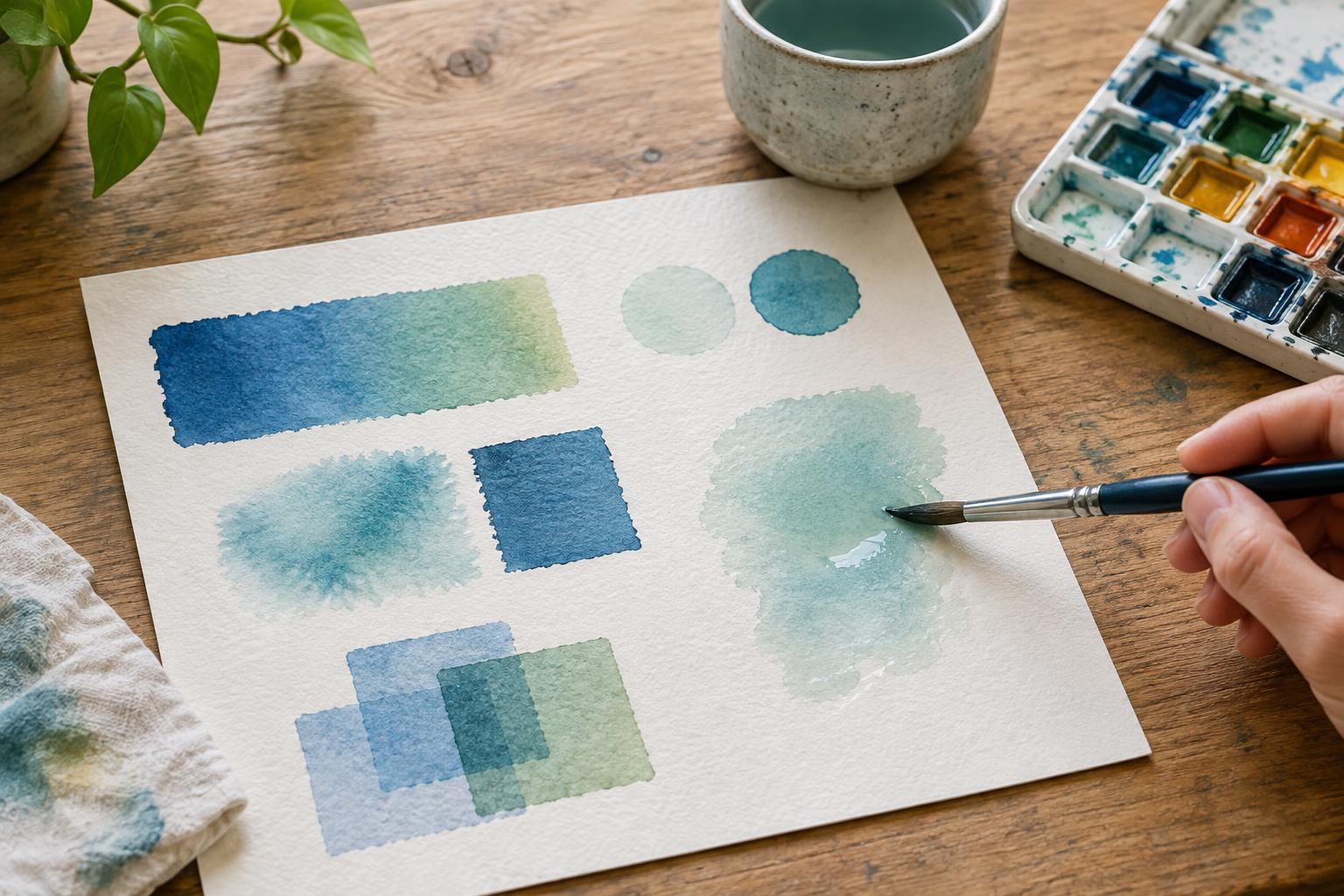
Watercolor remains sensitive to water after it dries. You can sometimes soften an edge or lift a little color with a damp brush, although the result depends on the paper and pigment. Too much scrubbing can damage the paper. Watercolor often works best when you plan where the light areas will be, then build from pale washes toward darker details. Letting a wash dry before adding another can help keep neighboring colors distinct.
Drying time also changes your pace. Thin watercolor washes may dry quickly, but a very wet page can require a pause. Acrylic can dry quickly on the palette while a thick patch on the painting stays damp longer. Rather than racing either paint, make pauses part of the project: step back, clean a brush or decide on the next shape.
Keep the starter setup small
For acrylic, a modest set of colors, two or three synthetic brushes, a palette or reusable plate, a water container and a cloth are enough to begin. Choose a surface intended for acrylic, such as a prepared canvas panel or suitable painting paper. A small panel is easier to finish than a large canvas and takes less paint. Protect your table and wear clothes you do not mind marking, because dried acrylic can be difficult to remove from fabric.
For watercolor, put more thought into the paper. Paper made for watercolor handles washes better than ordinary printer paper, which tends to buckle and wear. A small pad, a basic paint set, one medium round brush, water and a cloth can support many first projects. You do not need every brush shape or color. With either medium, a limited palette makes it easier to notice how colors mix instead of searching for the perfect tube.
Try the same simple subject in both
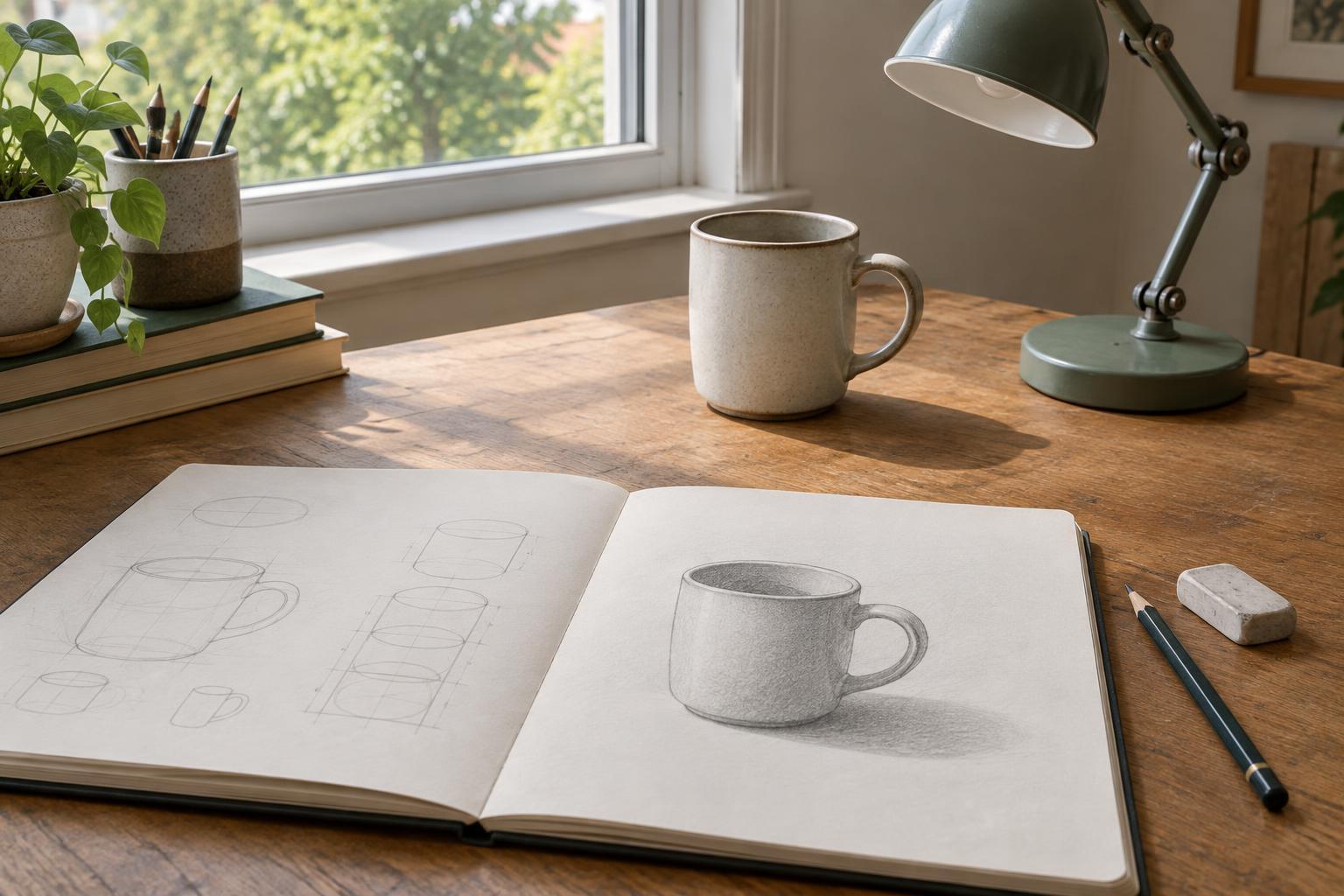
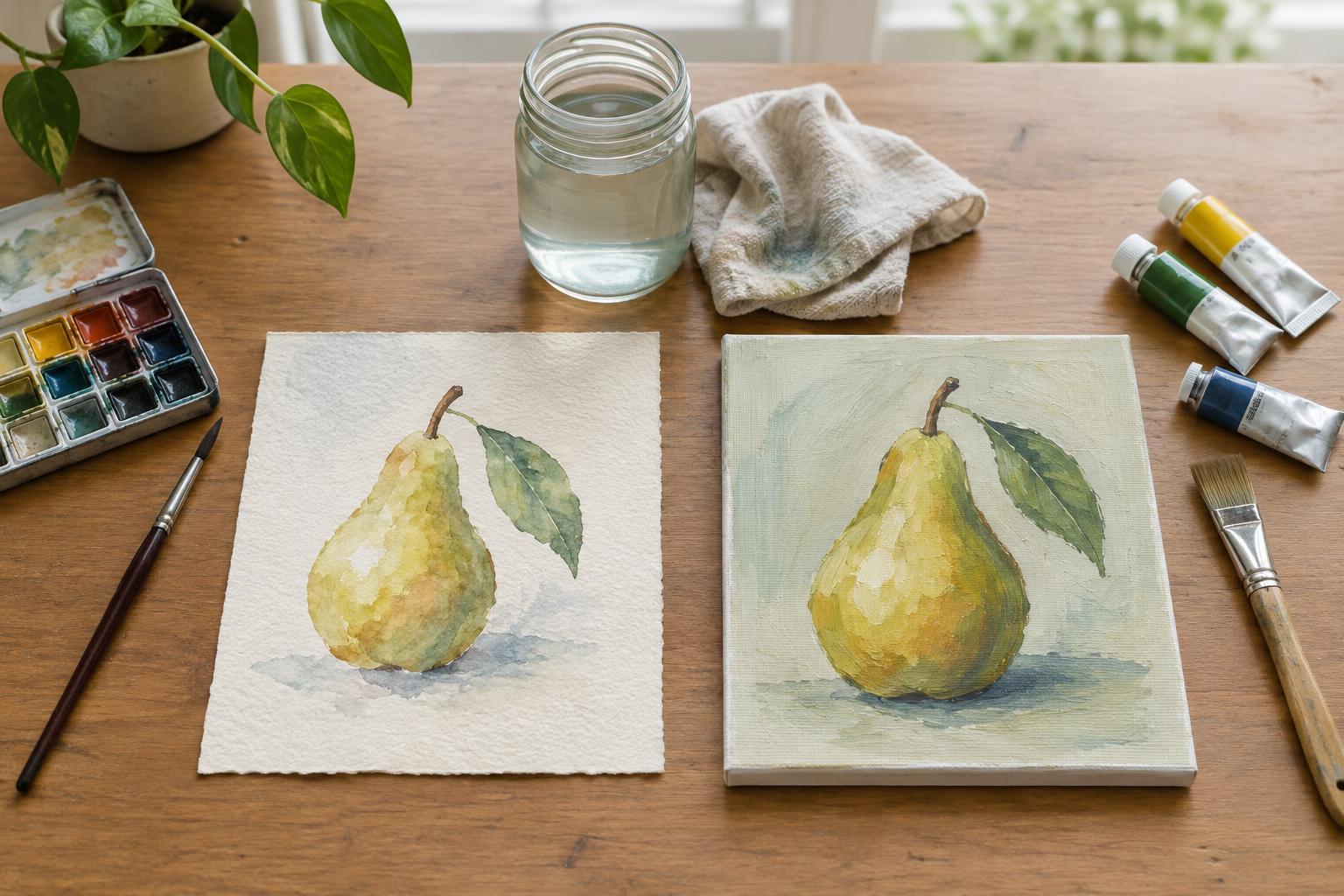
A useful test is a small painting of a mug, plant or piece of fruit against a plain background. Give yourself about a postcard-sized space for each version. Before starting, identify three things you can see: the main shape, its darkest area and the lightest area. This keeps the exercise focused on observation rather than on producing a polished picture.
For the acrylic version, block in broad shapes with thin layers, let them dry as needed, then add darker areas and a few light accents. For the watercolor version, leave the brightest paper unpainted, lay down a pale wash, let it dry, then add darker shapes in stages. Do not judge the two paintings by how closely they match. Notice which decisions felt satisfying, where you became impatient and which effects you would like to try again.
Choose a project that matches the medium
Acrylic is a practical choice for a small, graphic painting with clear shapes, strong contrast or a background you may want to revise. Watercolor is a good match for a loose botanical study, a soft landscape or a sketchbook page where transparent layers are part of the appeal. These are starting points, not rules; artists can use either paint in many styles.
If you remain undecided, choose the medium whose supplies fit your space and whose process makes you want to return for a second session. Your first project does not have to settle the question permanently. Finish one small piece, note one technique you want to improve and use that observation to plan the next one.